Q&A with lemur scientists Marina Blanco and Lydia Greene.
Meet the scientists

Images supplied by Lydia Greene.
Marina Blanco is an anthropologist turned lemurologist. She is interested in the ecology of the elusive nocturnal mouse and dwarf lemurs of Madagascar.

Lydia Greene is a lemur ecologist. She is curious about how lemurs adjust to living in different types of forests in Madagascar. Her favorite lemurs are sifakas, which are diurnal.But she also likes nocturnal ones, like the mouse, dwarf, sportive, and woolly lemurs.
Mongabay Kids: Why have some lemur species evolved to become nocturnal?
Marina and Lydia: There are many reasons to be nocturnal (active at night).
- You can avoid competition for food with diurnal animals (those active during the day) that eat the same things.
- You can avoid predators that hunt during the day. Some birds of prey and carnivores (like the vontsira) can be active during the day.
- You can take advantage of some foods, like insects, that are more abundant at night.
There are also drawbacks to being nocturnal. Being active at night means that great eyesight is less useful, and animals have to rely on other senses, like smell and hearing.

Mongabay Kids: What are some adaptations of nocturnal lemurs? How do they differ from their diurnal cousins?
Marina and Lydia: Nocturnal lemurs are very diverse. There are lots of different species, from the aye-aye to the sportive lemur to the mouse lemur. About 70% of lemur diversity today is in the nocturnal world.


One thing they all share is big eyes. Big eyes make it a bit easier to see at night, as they capture available light, such as moonlight. Otherwise, there’s not much else that sets the nocturnal lemurs apart as a group.
Some species eat leaves, some eat bugs. Some are very small, and some are quite big. Some sleep in nests during the day and others in tree holes. And a few of them even hibernate during the dry season. They really are very diverse.
Mongabay Kids: What are the roles of nocturnal lemurs in their ecosystems?
Marina and Lydia: Nocturnal lemurs do many things in and for their ecosystems. For example, they are essential sources of food for predators, like snakes and owls. Mouse and dwarf lemurs swallow fruit seeds while foraging and poop out the seeds, which then germinate and grow into new trees. Many nocturnal lemurs pollinate flowers. And aye-ayes fill the same niche as woodpeckers, by eating grubs out of trees.

Mongabay Kids: What are conservation challenges for nocturnal lemurs, and what can young people do to help them?
Marina and Lydia: One big challenge for nocturnal lemurs is identifying them. There are many species, and a lot of them look alike. For example, there are 19 species of mouse lemur, and in many places, more than one species lives in the same place at the same time. They are also very small, fast, and hard to see. So, how do we know who is who?
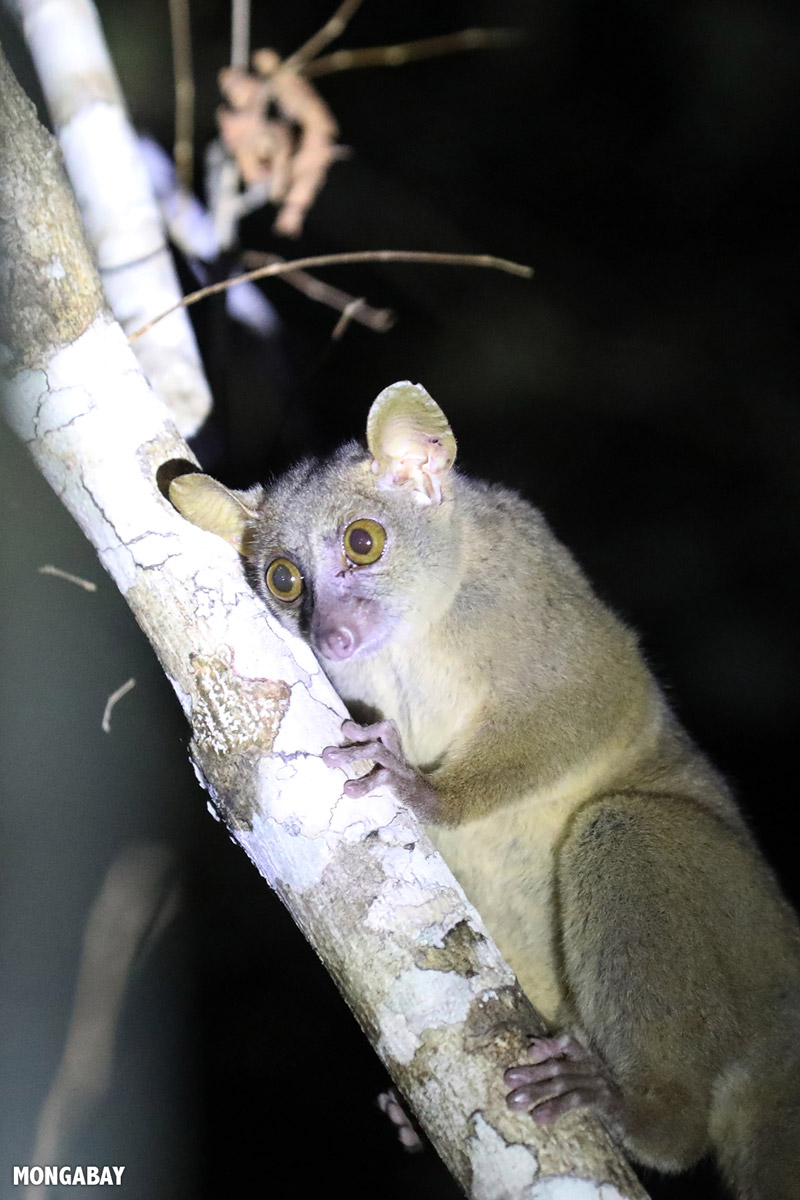
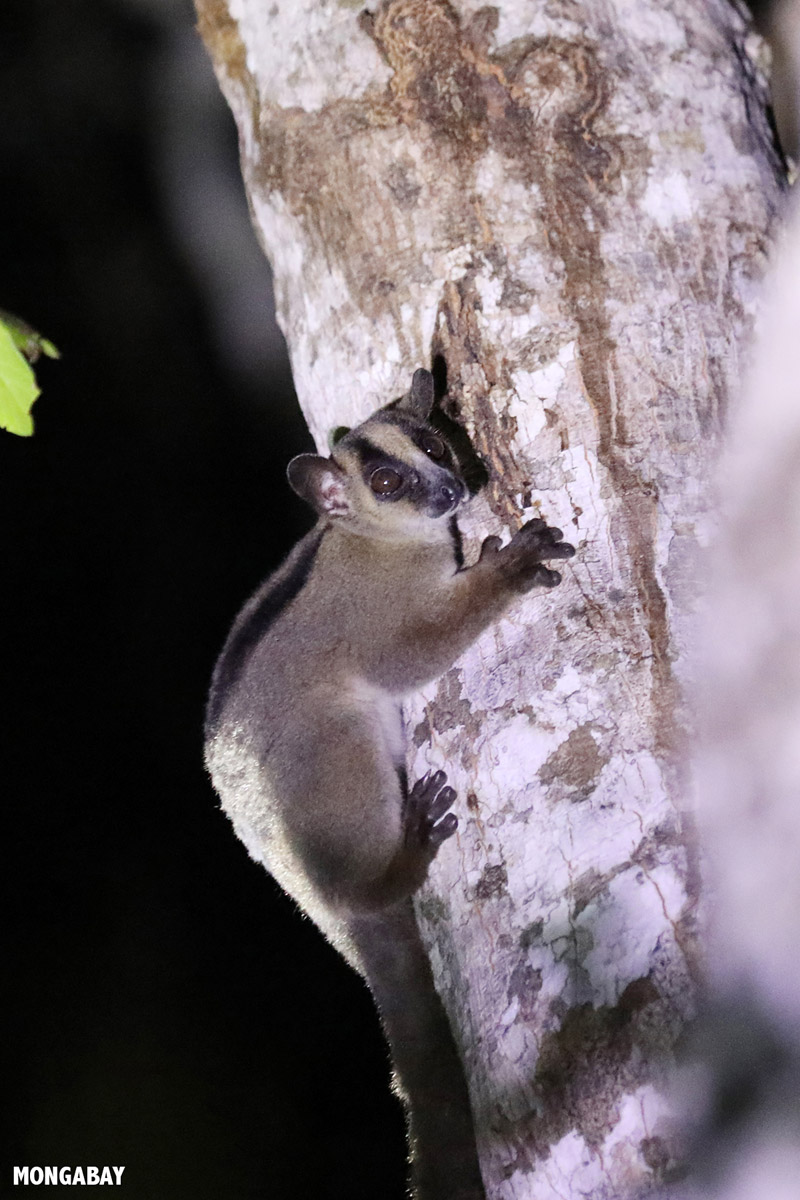


Also, nocturnal lemurs are really hard to study. Often, we need specialized technology to find and observe them without interfering in their lives. Not to mention that fieldwork at night can be exhausting for us diurnal primates. All this to say, we just know less about many nocturnal lemurs overall. We really need more research to know how they’re doing across ecosystems in Madagascar.
Young people can help by learning as much as they can and using their knowledge to raise awareness and funds for conservation groups working with nocturnal lemurs.

This story was created as part of the 2025 World Lemur Festival, in partnership with the Lemur Conservation Network.