
By David Brown
Some lemurs live by night. They hunt for fruits and insects when there is less competition from other lemur species. They look for mates and raise their babies. But they are not alone. They share the night with plant and animal neighbors, all trying to survive and reproduce. Let’s meet seven of them.
1. The flying fox
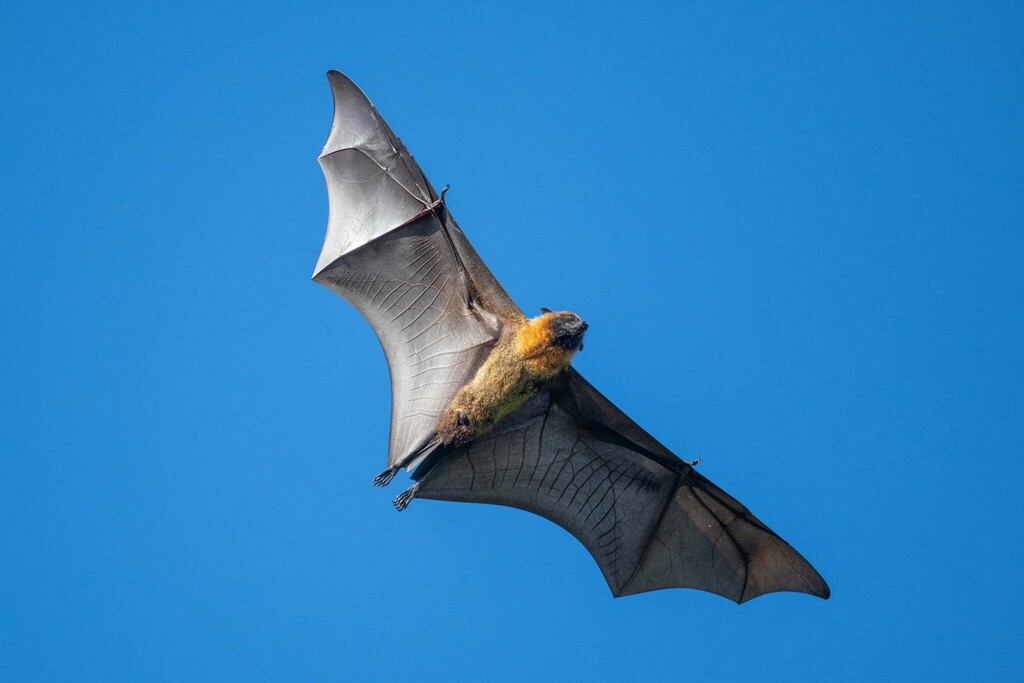
What is that rustling through the night skies over the forests? Something is swooping overhead — a bat!
The Madagascan flying fox is the largest bat species in Madagascar. These bats roost during the day in large groups of hundreds or thousands. In the past, flying foxes may have gathered in much larger groups, but now they are endangered. People hunt them, and their forest habitat is being cleared for farms and other human uses.
Madagascan flying foxes spend their nights sucking juice from fruits and sipping pollen from flowers. These bats chomp down on lots of fruit. Their poop contains thousands of seeds. These bats help plants disperse seeds throughout the forest with their nightly aerial poop delivery service.
2. Baobabs

Baobab trees attract bats like flying foxes with their flowers. When the bats drink the flower nectar, baobab pollen gets stuck on the fur on their heads. As the bats move from flower to flower on the baobab trees, they pollinate the flowers.
Six of the eight known baobab species live only in Madagascar. Baobabs can grow up to 30 meters (100 feet) tall and live for more than 1,000 years.
3. Darwin’s orchid
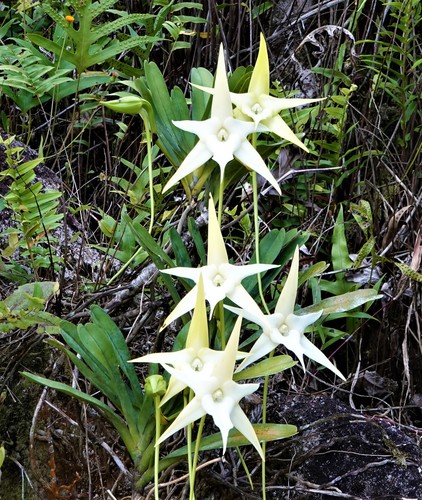
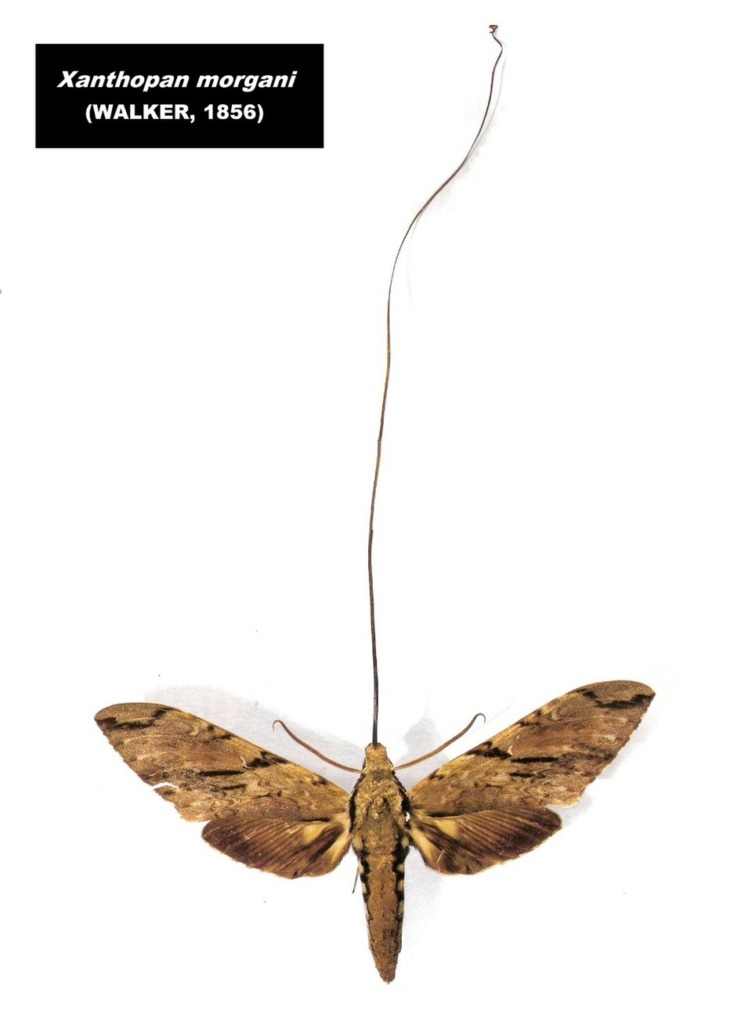
Many special orchids live in Madagascar, but of the more than 900 species found there, one star orchid stands out. A friend of Charles Darwin showed him this orchid, now called Angraecum sesquipedale, or the Darwin’s orchid. This orchid has a very long, thin tube where it stores nectar. Charles Darwin predicted that the orchid evolved to attract an insect with a very long proboscis — a long mouth part shaped like a straw to suck up nectar from flowers.
This insect turned out to be a moth, discovered in 1907. The moth has a proboscis 20 centimeters (more than half a foot) long that it uses to drink nectar at night. The moth flies to multiple orchids and pollinates the flowers because pollen sticks to it as it slurps up nectar.
4. Glowing mushrooms
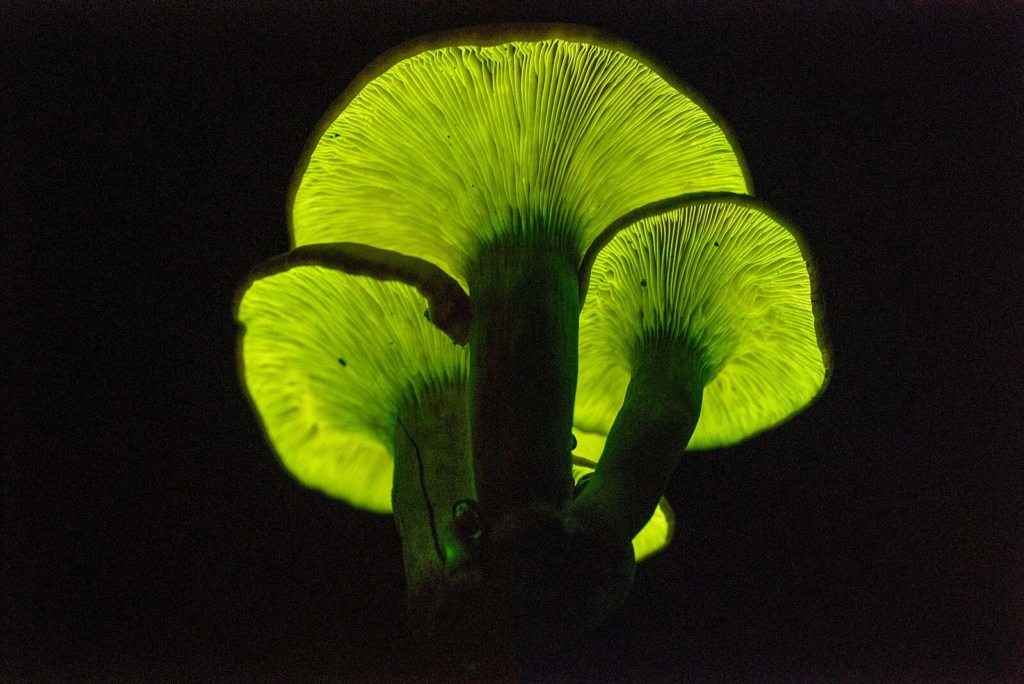
Fungi grow on fallen trees in the Madagascar forest and help break down the wood. This fungal lifestyle of eating dead plant parts and breaking them down into their biochemical pieces is called detritivory. Sometimes when fungi form reproductive bodies like mushrooms, the mushrooms glow at night. This glow may attract insects that help spread the spores of the fungi.
5. Fossas

The fossa is one of the main predators of lemurs. These relatives of mongooses have evolved into the ecological role of cats in Madagascar, since there are no native cats on the island.
A fossa has large eyes that let in lots of light, helping them see and hunt at night. Fossas are very agile hunters. They have long tails, which give them balance for jumping through the trees as they pursue their prey.
6. Owls

Owls are famous predators of the night, and that includes eating lemurs. At least three species of owls are known to eat small nocturnal lemurs: the Madagascar long-eared owl, the Madagascar red owl, and the barn owl.
Owls fly silently through the night looking for prey. When an unsuspecting mouse lemur jumps along a tree — GRAB! — an owl nails it in its talons and carries it away to become a late-night meal.
Scientists know what an owl eats because it coughs up a pellet of undigested bones and hair. By dissecting the pellet, they can tell what the owl eats, and lemurs are definitely on the menu.
7. Boas
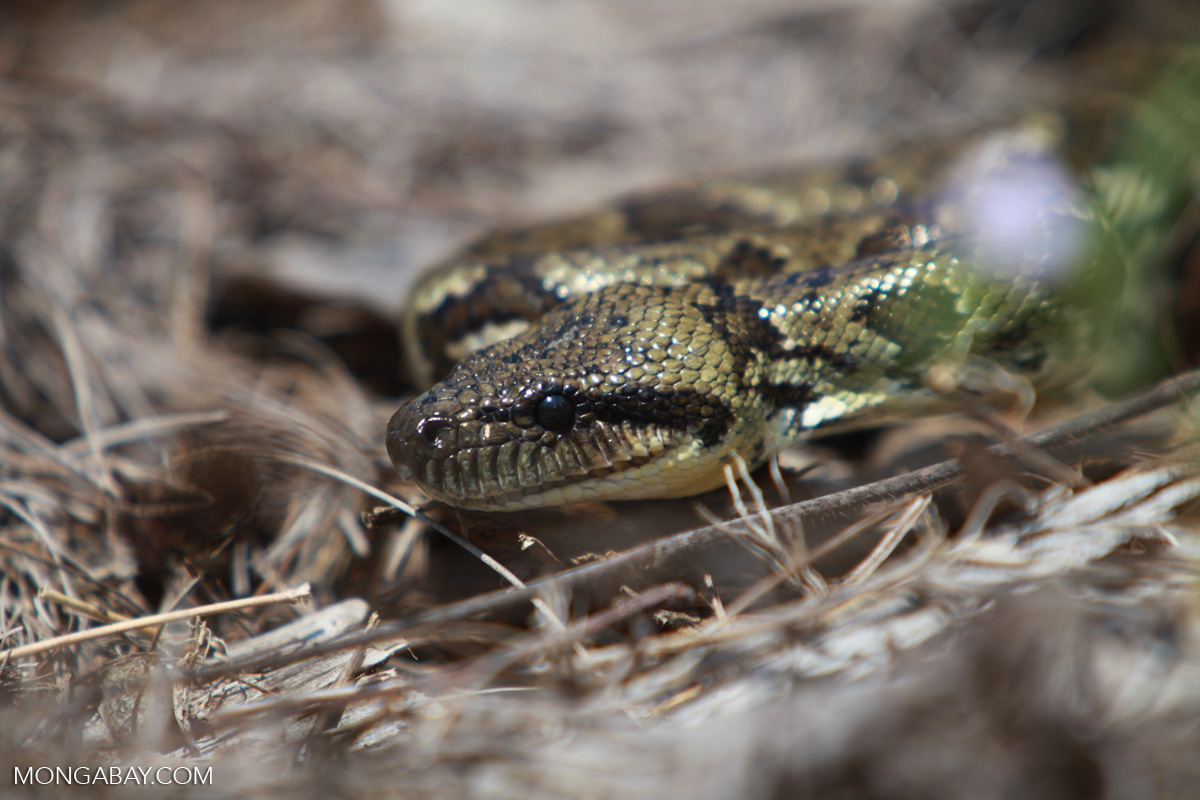
The Madagascar ground boa slithers across the forest floor in search of unwary lemurs, tenrecs, rodents, and other reptiles like chameleons.
Once, a ground boa was observed capturing a sifaka, a large lemur species. The sifaka’s family members rushed over to the snake and scratched it until it let the sifaka go. This was a worse experience for the boa than for the sifaka. The boa’s jaw was broken in the attempt to eat the sifaka, and it starved to death.
Acknowledgments: Thank you to Coral Chell and Lynne Venart of the Lemur Conservation Network for their review and contributions to this story.

This story was created as part of the 2025 World Lemur Festival, in partnership with the Lemur Conservation Network.

_H.E._Bigelow_814082.jpg)