We all know the house cat, a sometimes friendly, sometimes aloof beast, but did you know there are 40 living species of wild cats? Find out the difference between big cats and small cats and test your memory skills at the same time!
About big cats
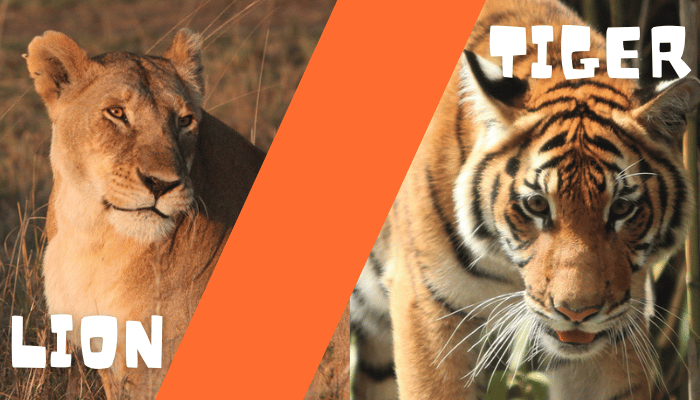
Number of species: Five big cats belong to a group called Panthera: the tiger, lion, leopard, jaguar, and snow leopard. Cheetahs and pumas are sometimes called big cats. While not closely related to the other species, they are also large and important predators.
Size: Male tigers and lions are powerful and muscular and can weigh over 200 kilograms (440 pounds)! The snow leopard is the smallest big cat: adults weigh around 40 kilograms (88 pounds). Big cats are apex predators — this means they are the top of the food chain, and they have no natural predators of their own.
Where they live: Jaguars and pumas live in the Americas. Leopards have the widest range, living across large parts of Africa and Asia. Lions live in Sub-Saharan Africa, and there is also a small population of lions in India. Snow leopards live in the highlands of Central Asia. Tigers live in scattered populations across Asia. Cheetahs live in parts of Sub-Saharan Africa. A small population of Asiatic cheetahs is found in Iran.
Fun facts!
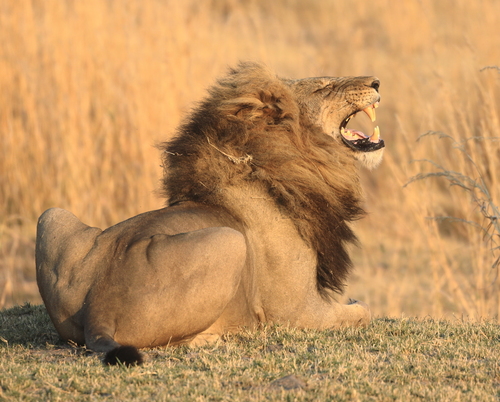
Only tigers, lions, leopards, and jaguars can roar. These big cats have a special throat, with stretchy ligaments and vocal folds that can create deep, loud sounds. Small cats have a different throat structure so they can meow and purr.
A male lion. Image by Darren Obbard, via iNaturalist (CC BY).

The cheetah is the fastest land mammal. During hunts, it accelerates with the speed of a sports car, and reaches top speeds of 110 kilometers per hour (70 miles per hour).
A cheetah in Kenya. Image by Rhett A. Butler for Mongabay.

Pumas have more common names than any other mammal. These include mountain lion, cougar, panther, and catamount.
A puma. Image by Rhett A. Butler for Mongabay.
Can you find the matching pairs?
Challenge question: How can you tell a jaguar and a leopard apart?
All images via Canva.
About small cats
Number of species: There are 33 species of small wild cats.
Size: Some are smaller than a house cat. The rusty-spotted cat (1-2 kilograms; 2-4 pounds) is the smallest. The Eurasian lynx (13-29 kilograms; 29-64 pounds) is the biggest. (See more small cat sizes here.)
Where they live: Small wild cats live on five continents, but not on Antarctica or Australia.
Fun facts!
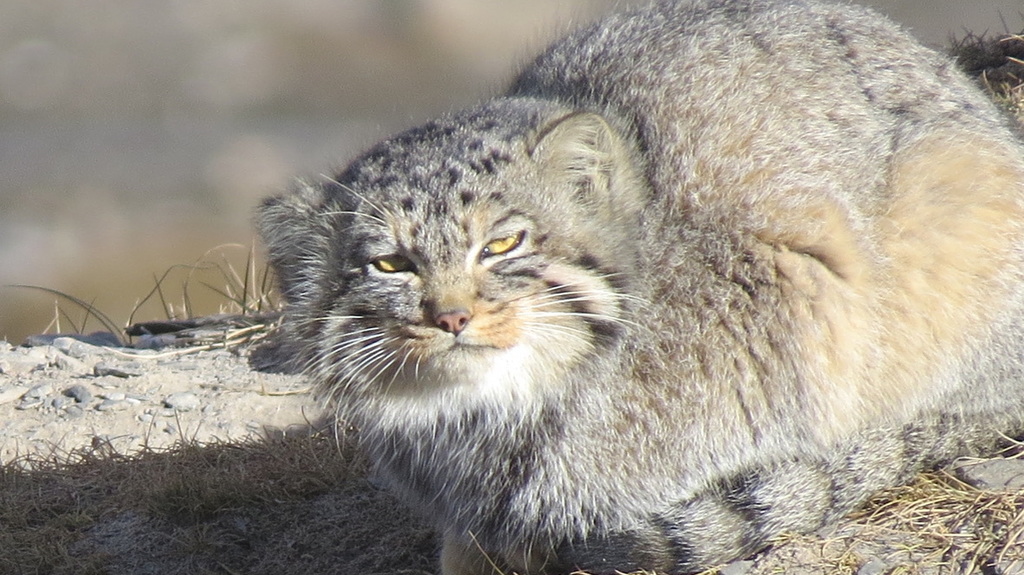
The Pallas’s cat (or manul) of Central Asia is a fluffball famous for its “grumpy” expression. (It is not really grumpy.)
A Pallas’s Cat. Image by David Thomas, via iNaturalist (CC BY-NC).
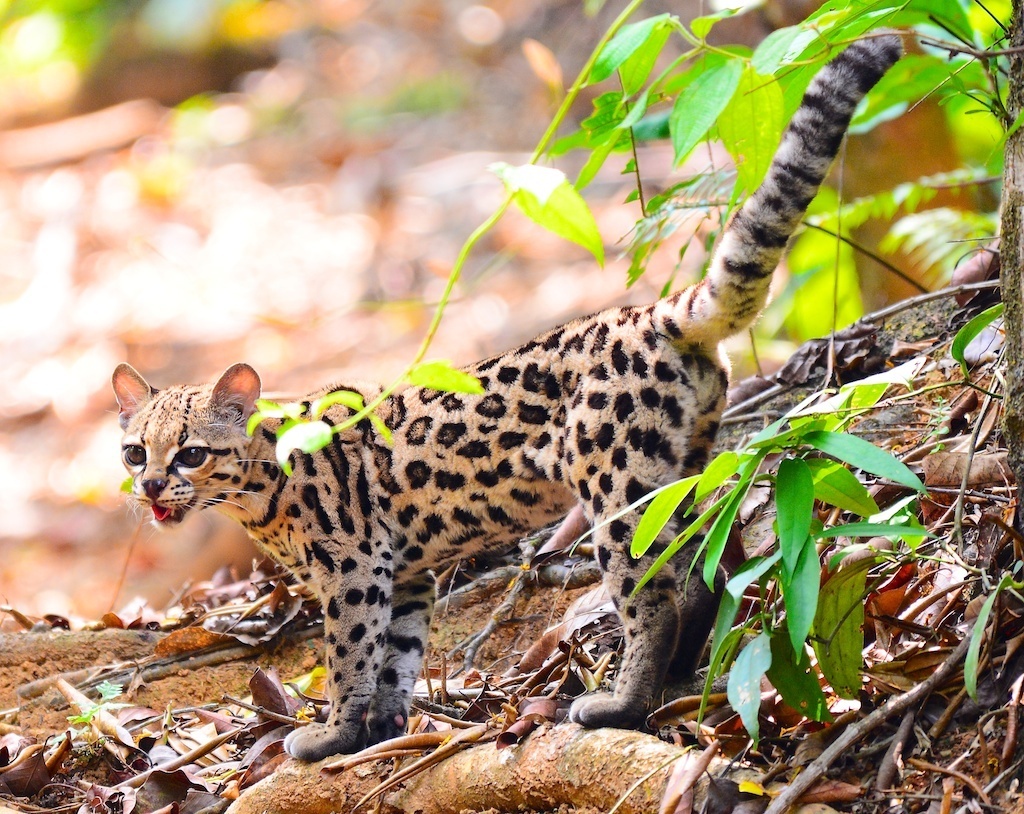
While most cats climb down trees backwards, two expert climbers — the margay and the marbled cat — can rotate their hind legs 180 degrees, allowing them to climb down trees headfirst.
A margay. Image by Giff Beaton, via iNaturalist (CC BY-NC).

Yes, small cats can swim, even though some would prefer not to! The fishing cat of South and Southeast Asia is a strong swimmer that preys on fish.
A fishing cat. Image by My World of Bird Photography, via iNaturalist (CC BY-NC).
Can you find the matching pairs?
Beware! Many small cats look quite similar to each other. Can you spot the differences?
All images via Canva.
Conservation status:
Many big and small cats are affected by habitat loss, loss of prey to eat, hunting, and conflict with humans. But these carnivores are important for healthy ecosystems, and many communities and conservation groups are working to save wild cats and their habitats.
More learning resources
IUCN Cat Specialist Group: Living species (click on each species name for facts)
Panthera article: Wild cats 101: What makes a big cat?
Panthera article: Meet the small cats