
By David Brown
Sharp fangs glimmer in the sun as the rampaging gorilla thumps his chest and screams. People run away in terror.
Another gorilla, this one several stories tall, crashes through New York City, smashing cars, punching buildings, and causing chaos as screaming crowds flee. Finally, the gorilla finds the tallest perch it can and climbs the Empire State Building. A brave pilot shoots down the beast and ends its reign of terror.

Such stories are how many people saw gorillas for more than a century. Gorillas were considered to be savage monsters that lived deep in the jungles of Africa.
We see gorillas very differently now. We recognize them as one of our closest living relatives. People love watching gorillas in zoos and in nature documentaries. Some people travel to visit mountain gorillas in the highlands of Uganda or lowland gorillas in the forests of Central Africa.
How did gorillas go from being seen as monsters to recognized as distant cousins that we love?
1. How did humans meet gorillas?

People who live alongside gorillas have known about them for hundreds of thousands of years. For these people, gorillas were not monsters, but neighbors and probably sometimes animals they hunted for food. Several ancient African languages have words for gorillas, indicating that people in Africa have known gorillas for a long time.
Outside of Africa, people did not know that gorillas really existed until the 1800s. There were rumors of animals that may have been gorillas from explorers in the 1600s, but the first confirmed sightings of living gorillas by a non-African were from a French-American explorer named Paul du Chaillu in the 1850s.
In 1876, a young male gorilla named Pongo was shipped to Liverpool, in the U.K., and then to the Berlin Zoo in Germany. Pongo caused a sensation — he was the first known live gorilla outside of Africa. People later realized that there may have been a baby gorilla mistaken for a chimpanzee in the U.K. before Pongo arrived, but Pongo was the first correctly identified gorilla. Sadly, he died soon after, in 1877.
2. Fear of the unknown gorilla

When people outside of Africa first learned gorillas existed, they knew almost nothing about them or their behavior and ecology. Without good information, people imagined things about gorillas and turned them into monsters in stories. There were stories of gorillas attacking people savagely and carrying away people into the jungle to eat them. Gorillas were seen as killer beasts. Artists made sculptures of gorillas attacking people. Newspapers and magazines printed stories about the mysterious monster gorillas roaming the African rainforests.
3. Extra large size fear of gorillas

The idea of gorillas as monsters reached an all-time high in 1933 with the release of the movie King Kong. Kong is a 25-foot-tall (nearly 8-meter) gorilla living on Skull Island somewhere in the Indian Ocean, where he fights dinosaurs and scares the people living there.
Kong gets captured and taken to New York City, where he escapes and rampages through the town, causing people to run in fear as he smashes cars and climbs skyscrapers.
King Kong defined gorillas as movie monsters for generations. Many other movies have shown gorillas as savage beasts.
4. Will the real gorilla please stand up?

Starting in the 1960s, biologists started studying gorilla behavior and ecology for the first time. George Schaller and Dian Fossey studied mountain gorillas and found that real gorillas are not savage monsters that eat people, but the exact opposite. They found that gorillas live in families led by a silverback male, and that gorillas are mostly vegetarians, although they do also eat insects. Gorillas play, groom, and socialize with each other, just as humans do. Baby gorillas romp around, play tag, tickle, and wrestle.
The popular image of gorillas in books, news stories, and movies turned out to be completely wrong.
5. Gorillas reimagined
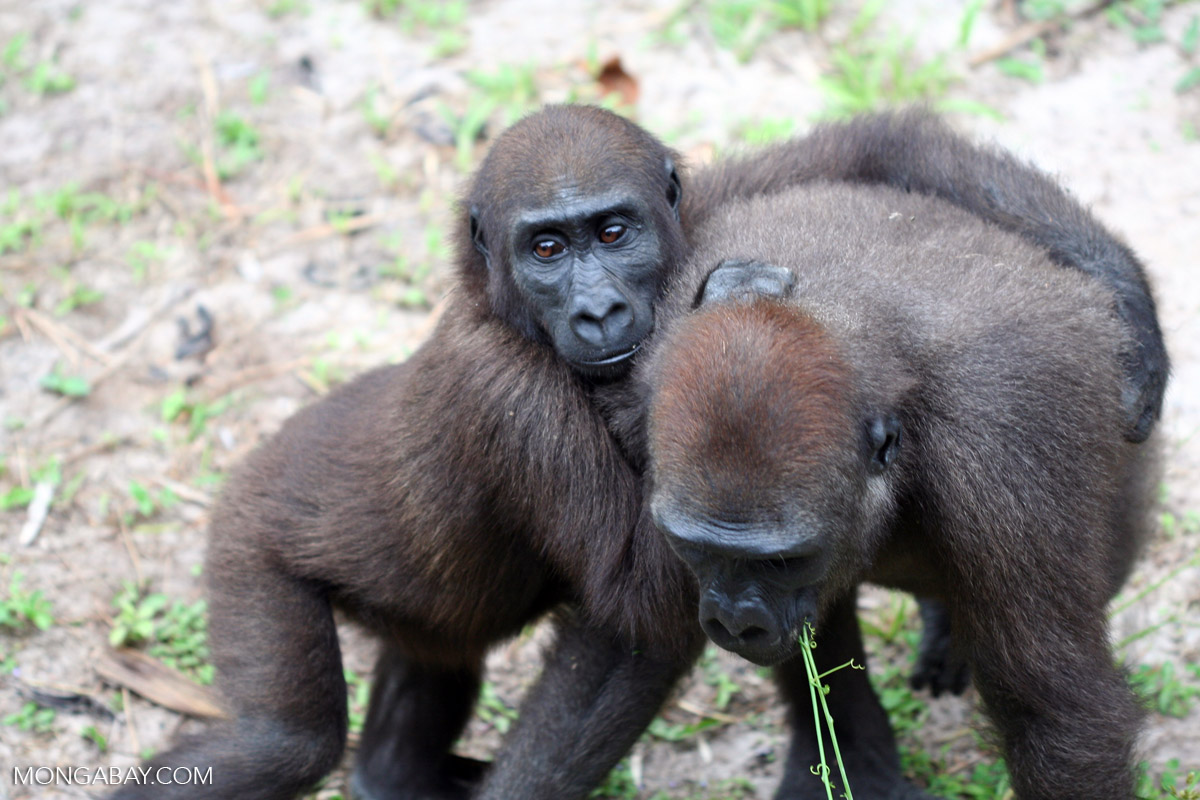
Scientists started reporting what they were learning about gorillas. Stories about how gorillas really live in their rainforest homes as peaceful and playful animals rather than savage monsters appeared in National Geographic and other magazines. Nature documentaries showed real gorillas instead of fake monster ones.

In the 1970s zoos started replicating the habitats of gorillas and allowing them to live in their family group structures. The Woodland Park Zoo in Seattle built the first heavily planted gorilla exhibit that looked like an African rainforest. People could actually see gorilla family life as it really exists rather than lonely and bored individuals in concrete boxes. When people started seeing what actual gorilla life in the wild was like, they changed their minds about gorillas being monsters.
We know now that gorillas are critically endangered species. People want to help protect gorillas and their rainforest habitats in Africa. People love watching gorillas, in videos, at zoos, and in the wild.


_three_2-year-olds.jpg)