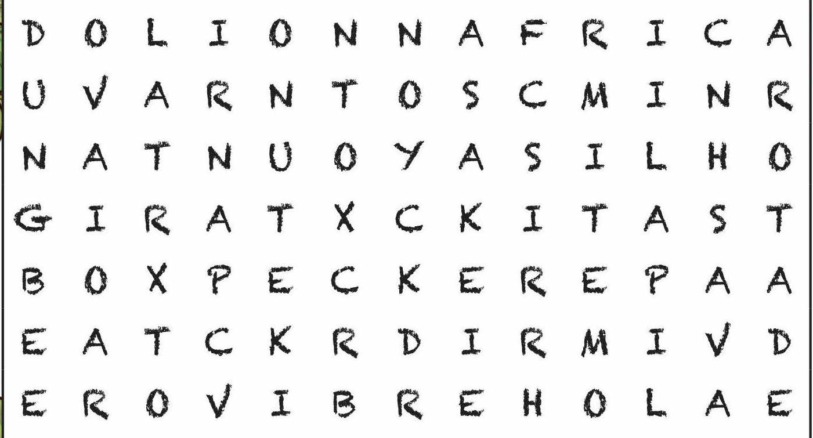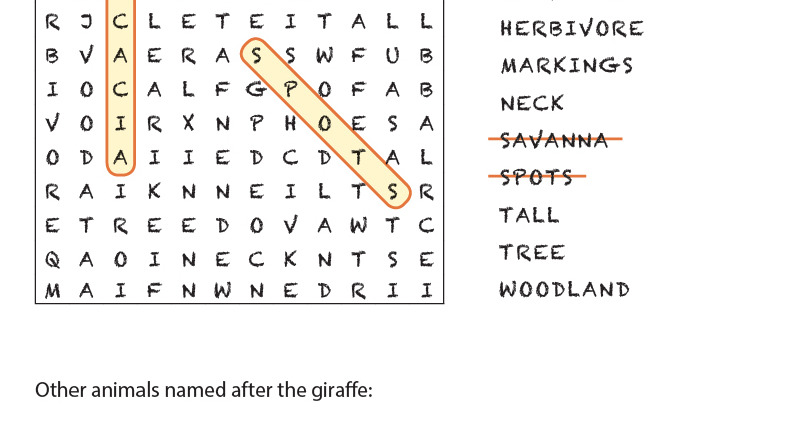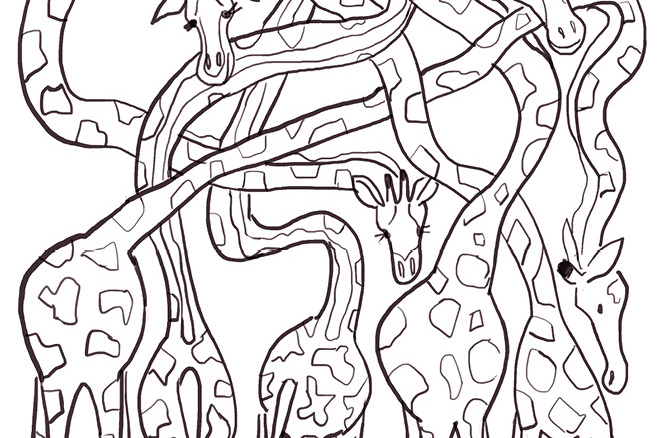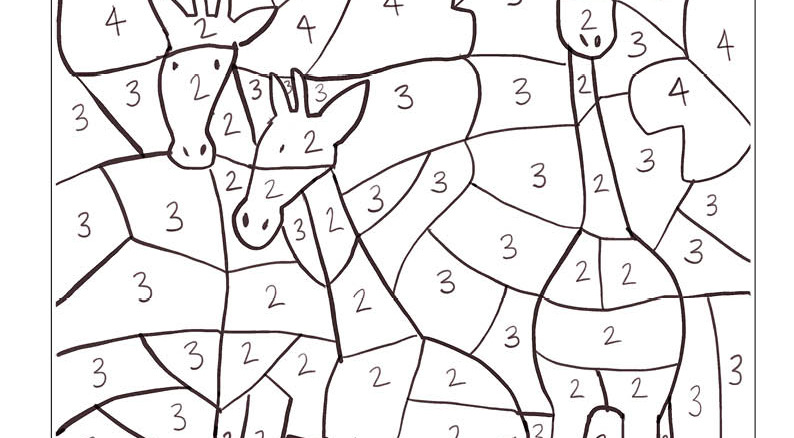
Calling all nature detectives! Can you guess the animals by their markings? Use the clues to help you solve the puzzle.

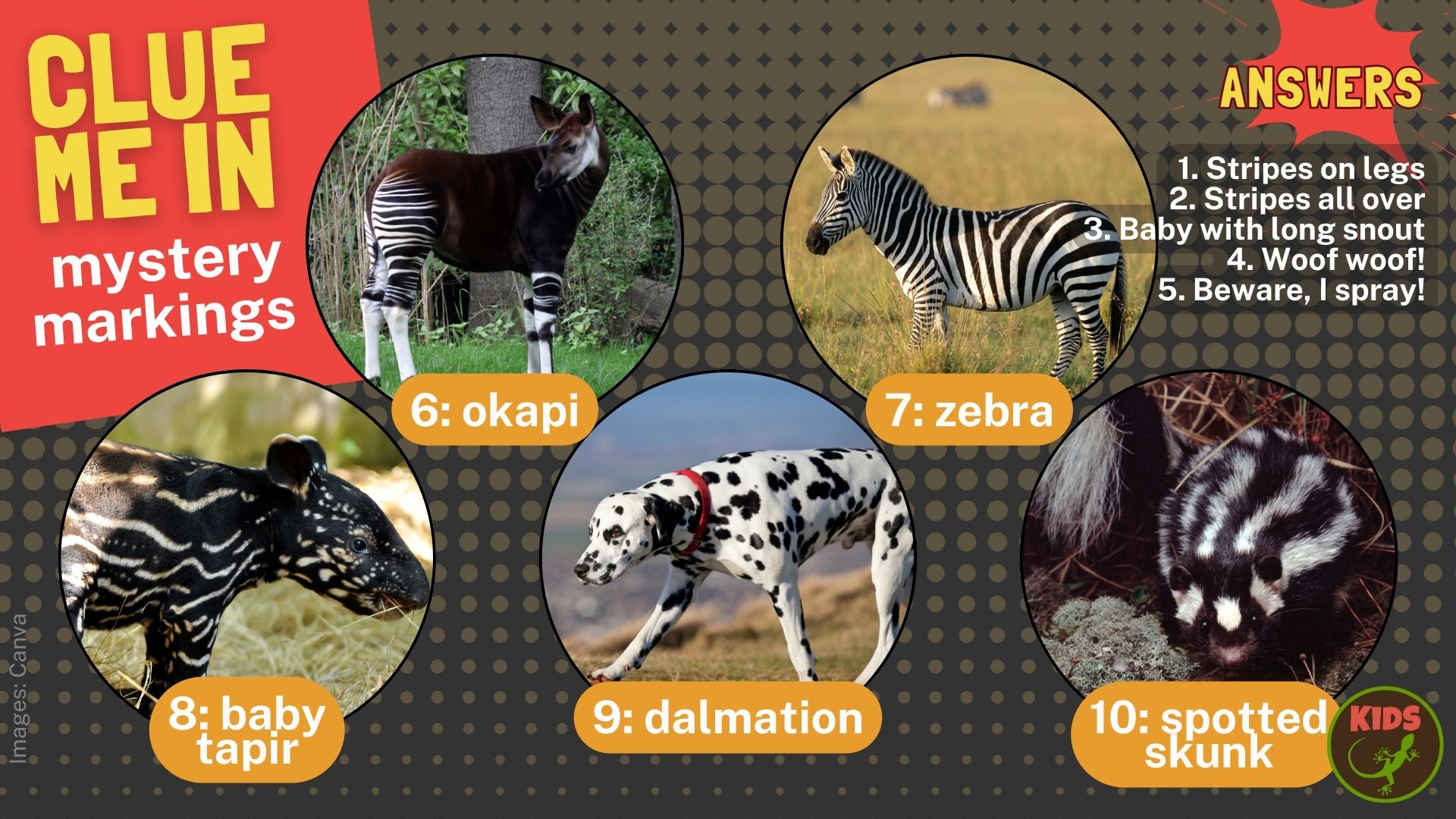
Click the tab to view the answers. Good luck!

Fun facts:
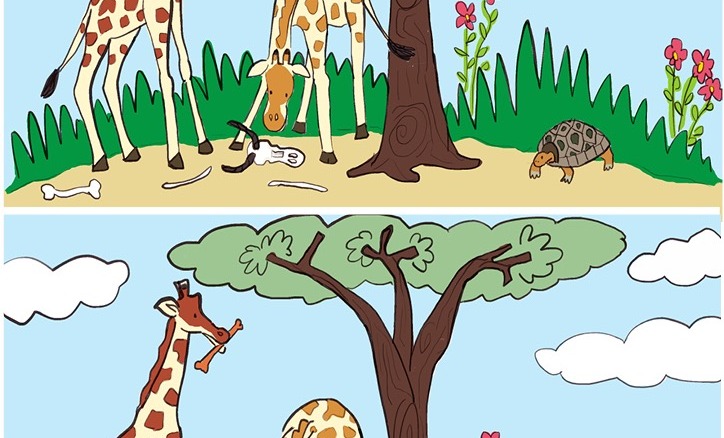
- Scientists recently announced that there are four species of giraffes. Coat markings are one of the ways scientists tell these species apart. Both Masai and reticulated giraffes live in Kenya, along with a third species, but they don’t interbreed in the wild!
- Many big cats have spots. Cheetahs, jaguars, and leopards all have them. Even lion cubs have faint spot markings to help them hide, but these fade as they grow up.


Click the tab to view the answers. Good luck!
Fun facts:
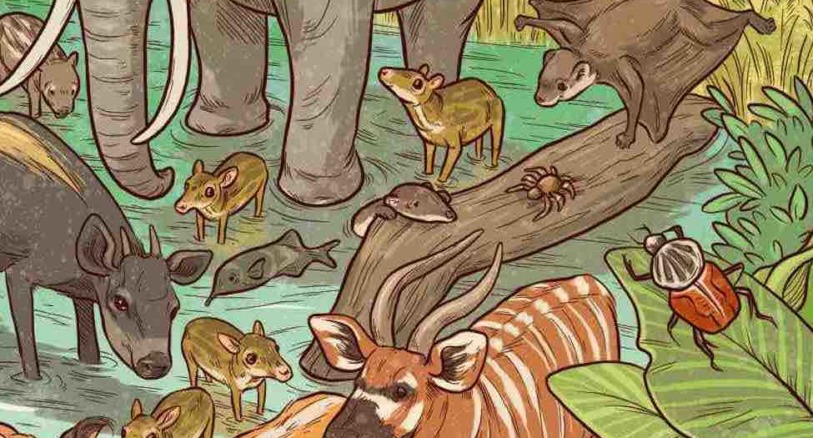
- Okapis are the nearest living relatives of giraffes. Like giraffes, they have bony horns on their heads.
- Zebra stripes confuse predators and also biting flies. Did you know? A zebra’s skin is actually black!
Why do some animals have stripes and spots?
Stripes, spots, and other patterns help animals survive and communicate.
Camouflage: Markings help prey hide from their predators by blending in with their surroundings. For example, the spots on baby deer make them hard to see on the forest floor. Giraffes’ patterns break up their outline against trees. But predators also use this tactic. A tiger’s stripes help it hide and sneak up on its prey.
Keeping cool: Some markings help animals thermoregulate, or maintain a healthy body temperature. For example, scientists found that giraffe markings help them shed heat and stay cool.
Communication and recognition: Animal markings can signal physical health and social status. Some animals use markings to recognize family or social associates or to attract mates.
Can you think of any animals not listed here that use markings for camouflage?
Educator tip: Have students create their own zoomed-in animal marking puzzles using Canva, Google Slides, or another classroom-friendly design tool. Have classmates guess the answers and hypothesize why animals might have these markings.