
By Monica Bond
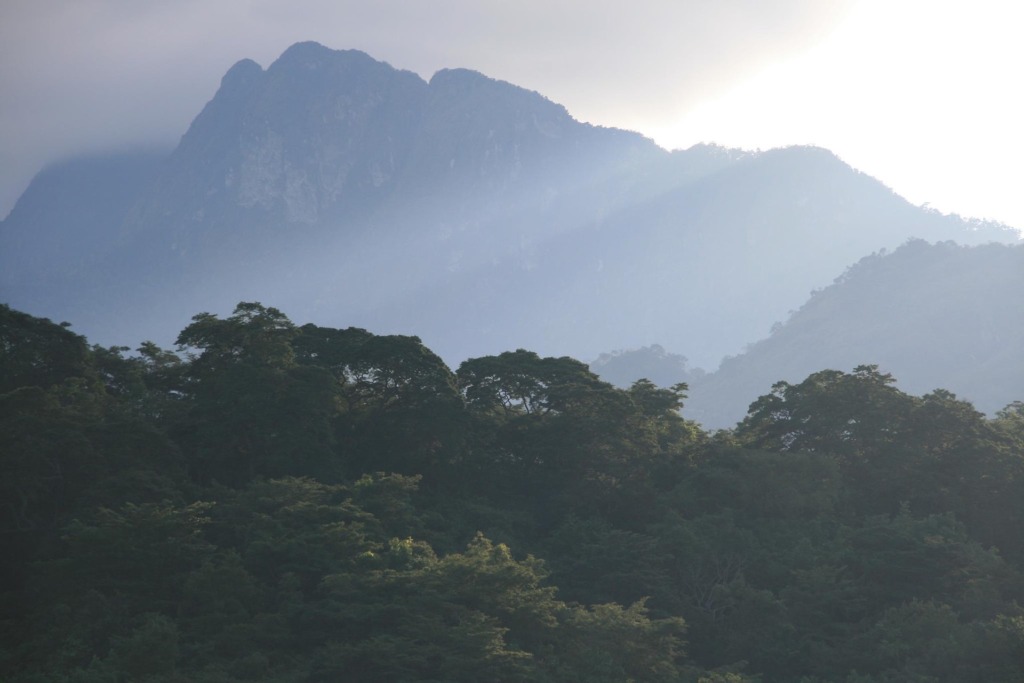
The Eastern Arc Mountains in Tanzania in East Africa are home to some of the oldest forests in the world. They contain many plants and animals found nowhere else, called endemic species. The mountains stretch high into the sky, with thick forests and tough terrain that is extremely difficult to cross, especially for some of the world’s biggest animals.
A team of scientists headed by Dr. George Lohay wanted to know how the Eastern Arc Mountains affect the movements of giraffes and elephants. They collected DNA samples from 450 elephants and 100 giraffes from three different ecosystems in Tanzania: Ruaha–Rungwa, Katavi–Rukwa, and Nyerere–Selous.

A map of the Eastern Arc Mountains (dark green) in Tanzania. Image by Eastern Arc Mountains Conservation Endowment Fund, via Wikimedia Commons (CC BY-SA 3.0).
Studying genetics from DNA can shed light on whether animal populations from one side of the mountains are mixing with populations from the other side. If giraffe and elephant populations on opposite sides of the Eastern Arc Mountains share similar DNA patterns, that means that they can move across the mountains. But if populations on either side of the mountains have different genetic patterns, that means that those populations cannot cross the mountains and have evolved some genetic differences from each other over time.
The scientists studied mitochondrial DNA, which is passed down from mother to baby, to look for signs of movement between different animal populations on each side of the Eastern Arc Mountains.
They found something very interesting:
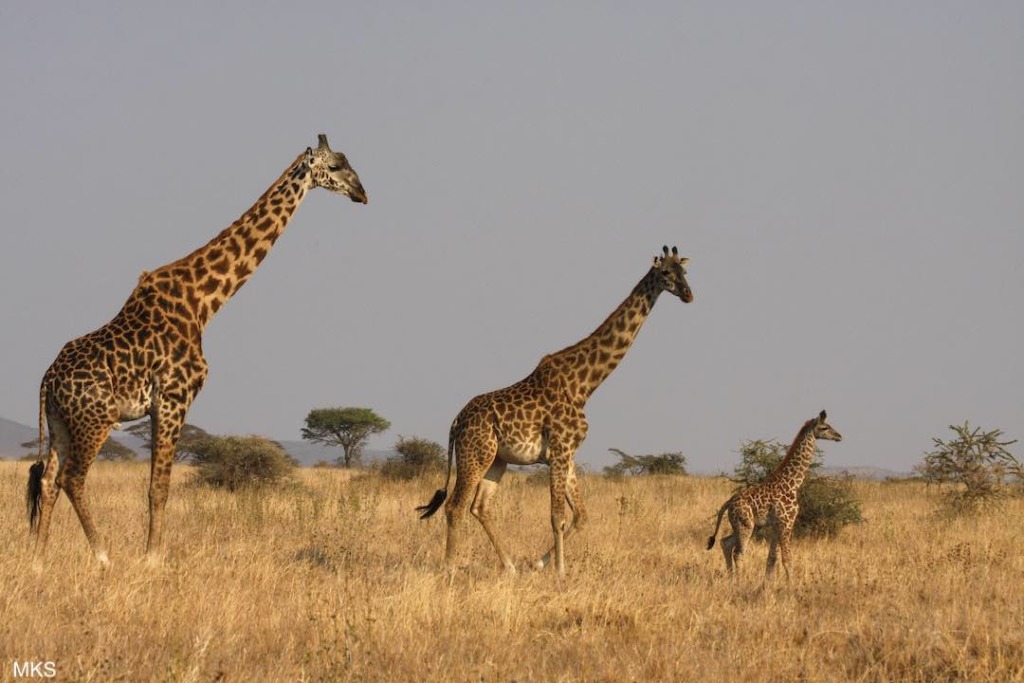
The populations on either side of the Eastern Arc Mountains showed no signs of mixing or crossing over. The giraffes were completely isolated from each other. This means the giraffes from the east and west sides of the mountains have been living separately for a very long time.

For elephants: The story was a bit different than for giraffes. Most of the elephants on either side of the mountains had distinct DNA, but there was a small amount of genetic overlap between the populations. This result suggests that, in the past, a few female elephants may have crossed the mountains — but that this happened rarely.
It turns out that the forests of the Eastern Arc Mountains are indeed a barrier that even the largest land animals on Earth struggle to cross. Giraffes do not seem to be able to cross the barrier at all. Elephants only cross the barrier very rarely.
Citation:
Lohay, G., Pearce, D., Bond, M.L., Lobora, A., Lee, D.E., & Cavener, D. (2025). Does the Chain of Eastern Arc Mountains Impede Gene Flow? Genetic Evidence from the African Savanna Elephant and The Masai Giraffe in Tanzania. African Journal of Wildlife Research, 55(sp2), doi: https://doi.org/10.3957/056.055.0408
Monica Bond is a Principal Scientist for Wild Nature Institute.



.jpg)