Cameroon has one of the largest tropical rainforests in Africa, but deforestation is a serious problem. The country lost more than 700,000 hectares (1.7 million acres) of rainforest between 2002 and 2020. That area of rainforest is roughly equivalent to 16 million basketball courts in size.
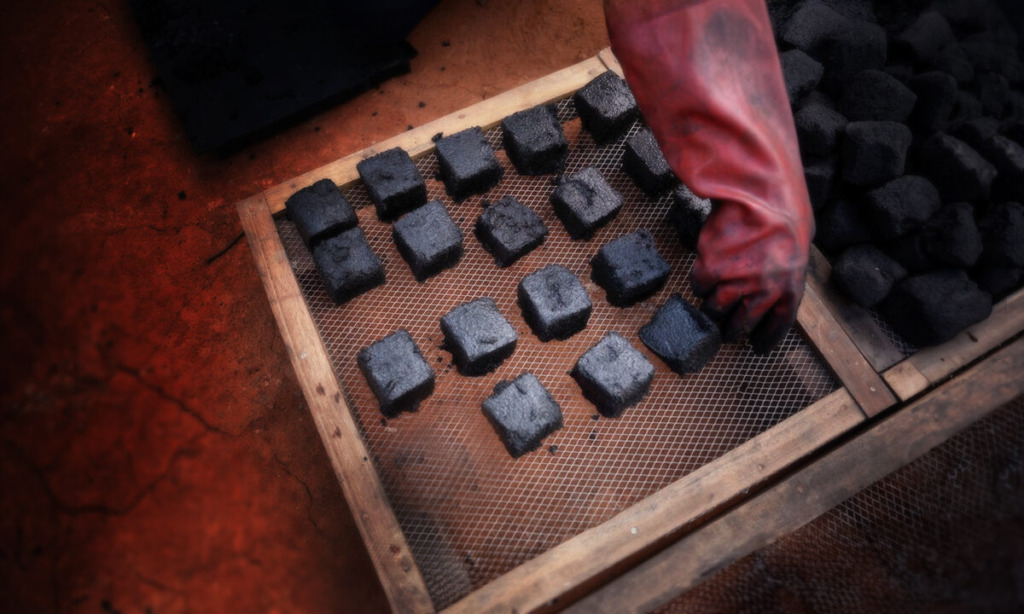
Much of the rainforest that is cut down in Cameroon gets turned into charcoal for cooking. But Steve Djeutchou, an environmental engineer, created a cheaper alternative to charcoal, which could help protect rainforests.
Steve figured out how to turn organic waste into a form of charcoal called biochar. His biochar is made from banana peels that he gets from a snack factory. He collects the banana peels in large sacks and takes them to his workshop.
Steve dumps the banana peels into a device called a carbonizer. The carbonizer converts organic waste like banana peels into a charcoal-like substance. The substance is mixed with clay or starch and put into a mold and dried. The final product is a brick of biochar.
Unlike regular charcoal, biochar does not come from trees. So if enough people switch to biochar made from organic waste, this would help protect the rainforest.
Steve Djeutchou created a school called STEMA Academy to train people how to make biochar. Students also learn practical electronic skills. So far, Steve has trained about 400 people at his school.
David Brown adapted this story for Mongabay Kids. It is based on an article by Kristine Sabillo and a video produced by Mongabay contributors Erwan Schiex, Thomas Diego Badia and edited by Mongabay’s Juliette Chapalain.