Omar Salvador Fernández Chequemarca and Harold Ferreira Romero, two fishers from the Indigenous Macaquiño community in Vaupés. Image by Aimee Gabay/Mongabay.
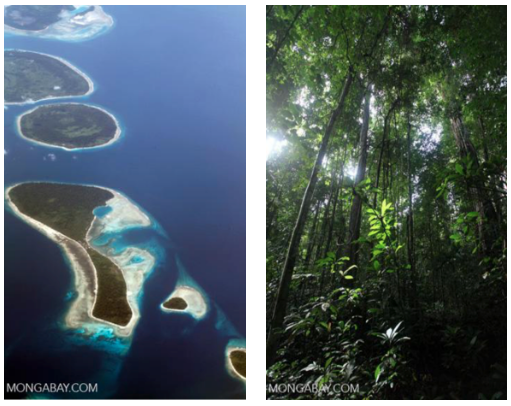
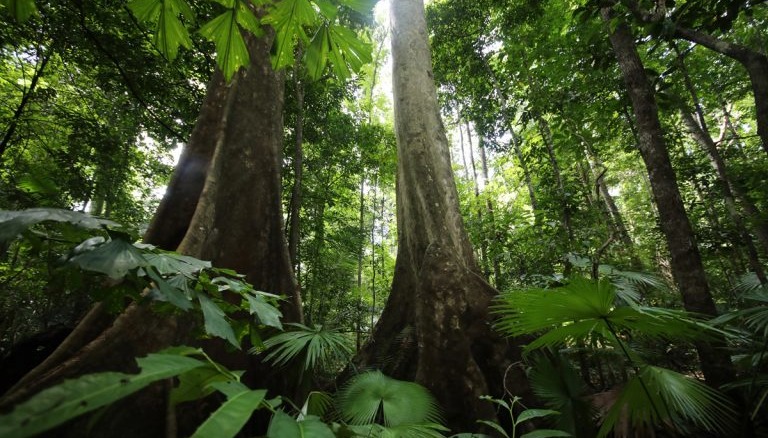
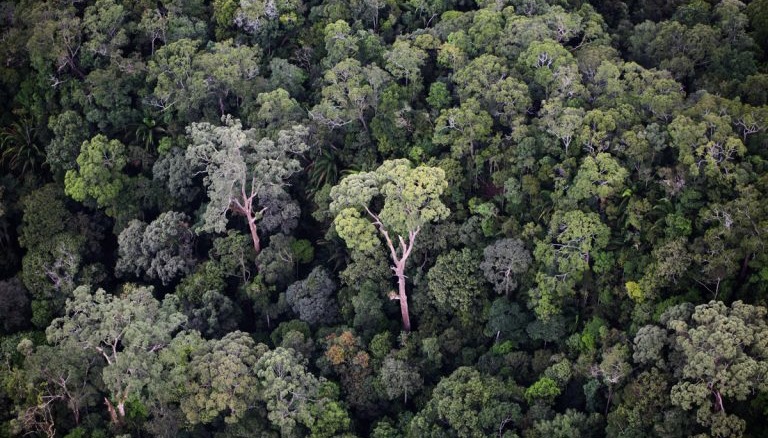
The Indigenous Macaquiño community lives in the Amazon rainforest of southeastern Colombia, along the banks of the Vaupés River.
The river and local lagoons are important to daily life. Water is used for drinking, bathing, and washing. The waterways also provide food. Many kinds of fish live and breed here.
Fishing is an important part of Macaquiño culture and spiritual life.
For many generations, the Macaquiño lived in balance with the forest and river. Their traditional calendar tells them when to harvest certain types of foods. They developed rules and rituals to help protect the environment.
Today, some fishers use modern techniques like longlines and mesh nets. But many community members still use ancestral knowledge and traditional fishing methods that have been passed down through the generations.
Traditional fishing methods of the Macaquiño
A traditional fishing rod:

During the dry season, when water levels are low, fishers use a traditional fishing rod.
Fishing with poison (barbasco):
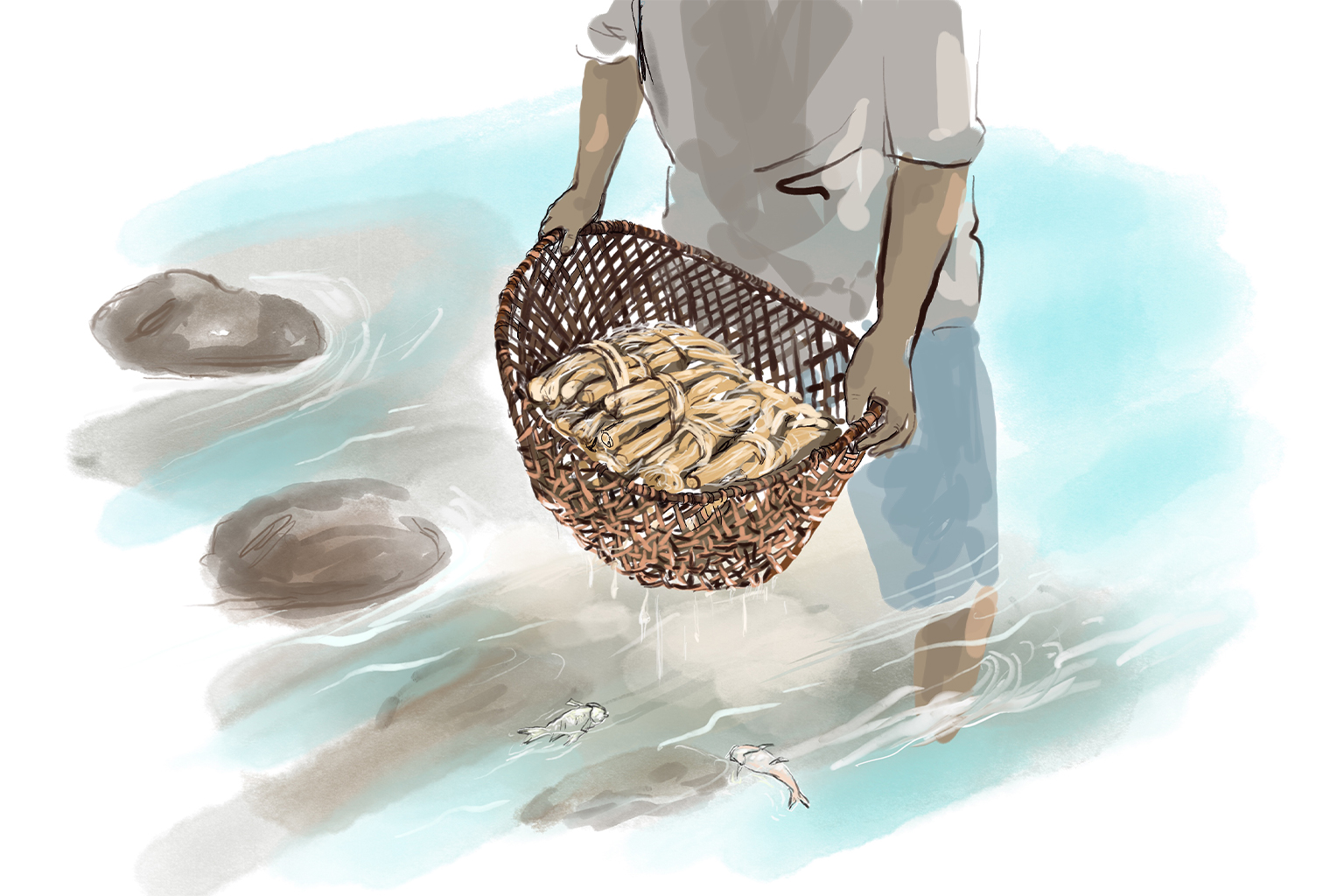
Past generations of Macaquiño also used poisons, also known as barbasco, during the dry season. The community’s sabedor, or wise person, watched over this technique. The sabedor said prayers to keep the fish from sinking.
The sabedor also monitored water currents and made sure each family caught only what they needed. Later, they prayed over the barbasco again to stop the poison harming more fish.
A kakurí fishing trap:
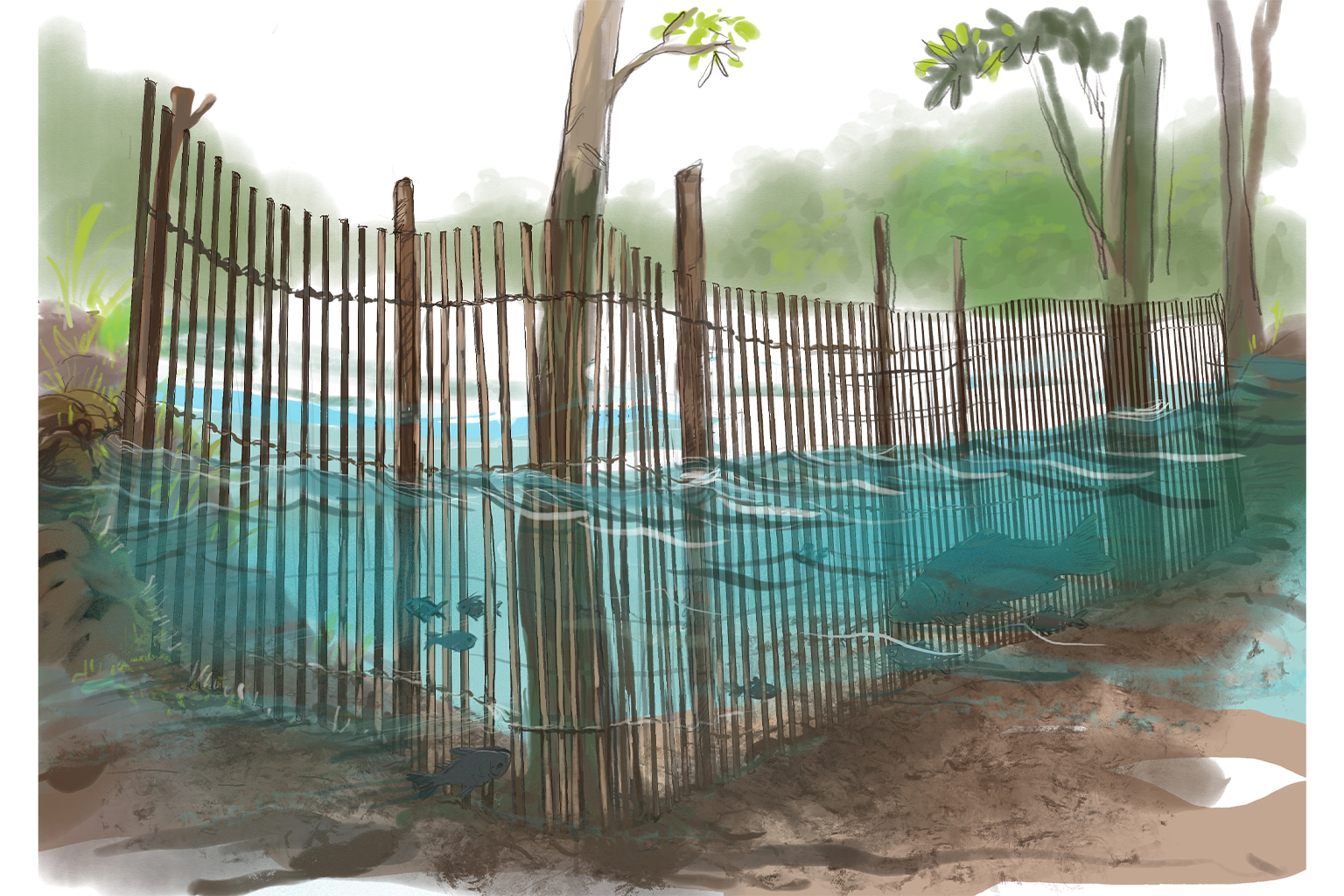
During the rainy season, rivers and lagoons swell and overflow onto the land. When this happens, fishers use another type of traditional fishing trap called the kakurí (or kobobÿ in the Cubeo language).
The kakurí is built along the banks of the river. It consists of two fences made of reeds. Fishers collect the small fish that swim through an opening where the fences meet.
When the kakurí is set up, fishers recite a prayer and maintain a special diet.
Matapí fish traps:

One traditional fishing trap still used today, but which few know how to make, is the matapí (or doriñÿ in the Cubeo language). They are made from different types of palm plants.
Fishers place these traps upstream and cover them with leaves. A small opening is left uncovered so that fish can swim inside.
A hanging matapí, or dorido, is attached to a flexible rod by a hook. When fish take the bait, their movement triggers a mechanism that launches the rod and basket to the water’s surface, trapping the fish.
Educator tip: Invite students to discuss fishing for food and recreation. How does fishing connect humans with nature? What does it mean to fish sustainably?
This story is adapted from on an article by Aimee Gabay, published on Mongabay News.