Red sand boas are cool snakes, but they are in danger because of mistaken human beliefs about their special powers.
The red sand boa is a non-venomous, thick reddish snake that lives across India. This calm, harmless snake lives in dry, sandy, and rocky landscapes, often near farms. The red sand boa burrows in loose mud and sand. It eats rats, mice, and lizards.
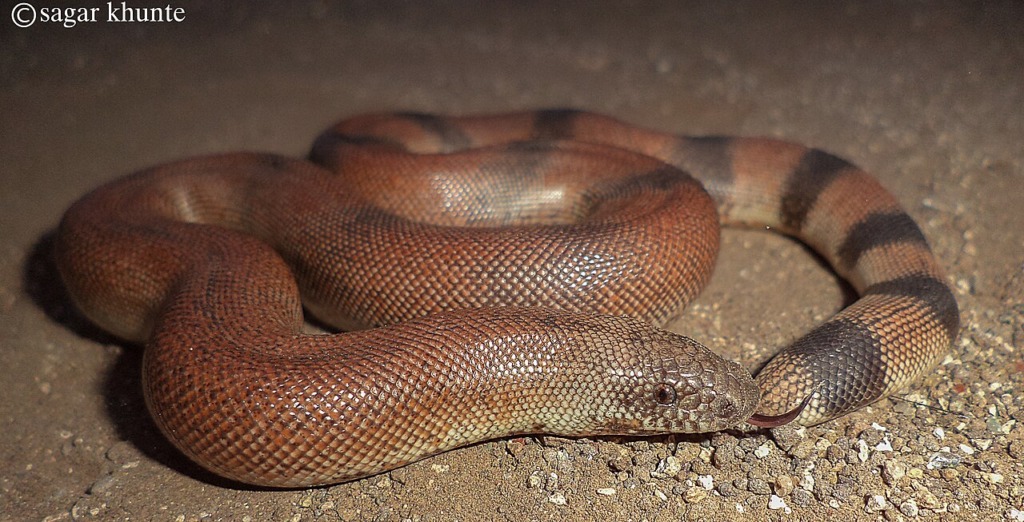
The red sand boa is known in Hindi as do muha. Do muha means “double-headed.” The red sand boa’s tail resembles its head, and it uses this trick as a defense against predators. The boa coils into a ball and places its tail on top. A predator will then attack the snake’s tail instead of its head, which is tucked deep in the coil.
In India, several superstitions and myths fuel a large illegal trade in the red sand boa. “One of the important ones is that this snake can lead people to hidden treasures, or the fact that if you keep this snake in your house, you will actually certainly become rich,” explains reptile expert Nirmal Kulkarni.
Another common superstition is that the snake attracts wealth based on its weight. Supposedly, the heavier the snake is, the more treasure it will attract. This superstition leads some people to try to increase a snake’s weight by making it swallow large tubes or balls of lead. Increasing the snake’s weight like that can harm or kill the snake.
Rajesh Chahal, a wildlife inspector with the forest department in Haryana, India, says there’s no truth to any of these stories. “This is an organized crime,” he says.
There are fewer red sand boas in areas where they used to be common because of this illegal trade. Habitat loss is also a major threat to their numbers.
Teaching people that superstitions about red sand boas are false might help decrease demand for them. It would also help the red sand boa if people stopped buying wild-caught snakes.
David Brown adapted this story for Mongabay Kids. It is based on the reporting of Shatabdi Chakrabarti, edited by Shreya Dasgupta.