This is Part 1 of an illustrated series on road ecology. Part 2 covers how wildlife crossings help animals and connect habitats.
Why we build roads

We use roads every day. We use them to get to school, to the shops, the doctor, or wherever we need to go.
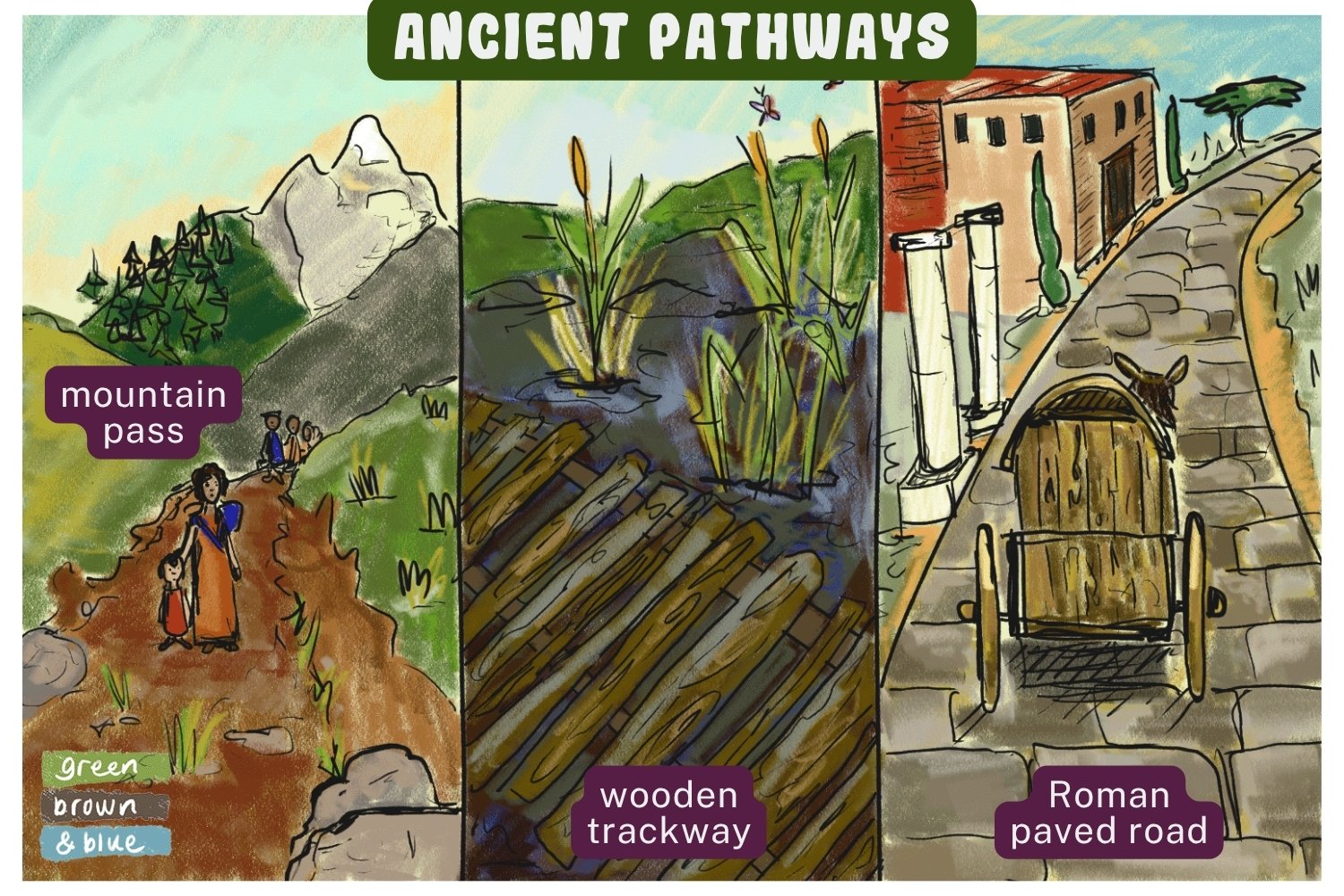
Humans have traveled pathways since ancient times. Early engineered and paved roads, 4000-6000 years ago, helped people trade goods, explore new places, and look for new resources.

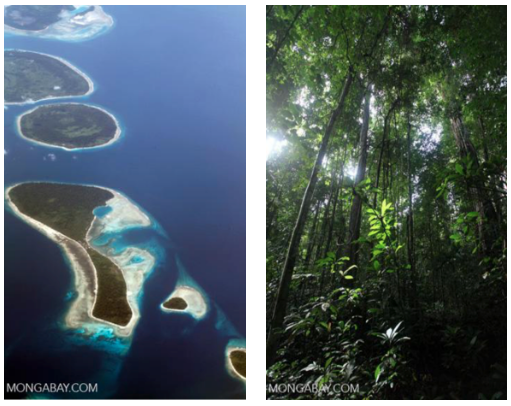
Today, more than 64 million kilometers (40 million miles) of roads criss-cross the planet, from megacities to remote tropical forests. And more roads are yet to come.
Roads may help us, but what do they mean for wildlife and the environment? Let’s find out.
How roads affect wildlife

Animals need to move too. They move to find food and water, to escape danger, and to meet up with other animals. Our roads alter their habitats and interfere with their movement.

Roads cut habitats into smaller pieces — this is called fragmentation. When animals avoid roads or can’t cross them, they may lose access to a water source or a favorite food tree. They may be separated from their family or group. They may have trouble finding mates.
Did you know? Roads affect animals in different ways. Some animals avoid roads. Some scavengers — such as crows — are attracted to roads because of roadkill. Some animals use roads as pathways.

Road collisions are dangerous to wildlife.
Hundreds of millions of animals — not including insects — are injured or die on roads each year around the world.
Some animals are very vulnerable to collisions.

Pollution from roads can affect animal health and behavior.
Cars and trucks cause noise and air pollution. Street lighting and vehicles create light pollution.
Did you know? Road noise makes it hard for birds to hear each other’s calls. In one study, scientists found that yellow warbler birds that live closer to roads are more aggressive!
How roads affect plants

Roads also impact plants and plant communities.
Many animals are seed dispersers. If they can’t move around a forest or grassland because of a road, then the plant seeds they carry will also remain stuck.
Roads help invasive plants travel. Seeds trapped in car tires can spread from place to place.
Pollution from cars and the goods they carry can kill plants on roadsides. Road salts used for ice or snow can also harm plants.
How roads change landscapes
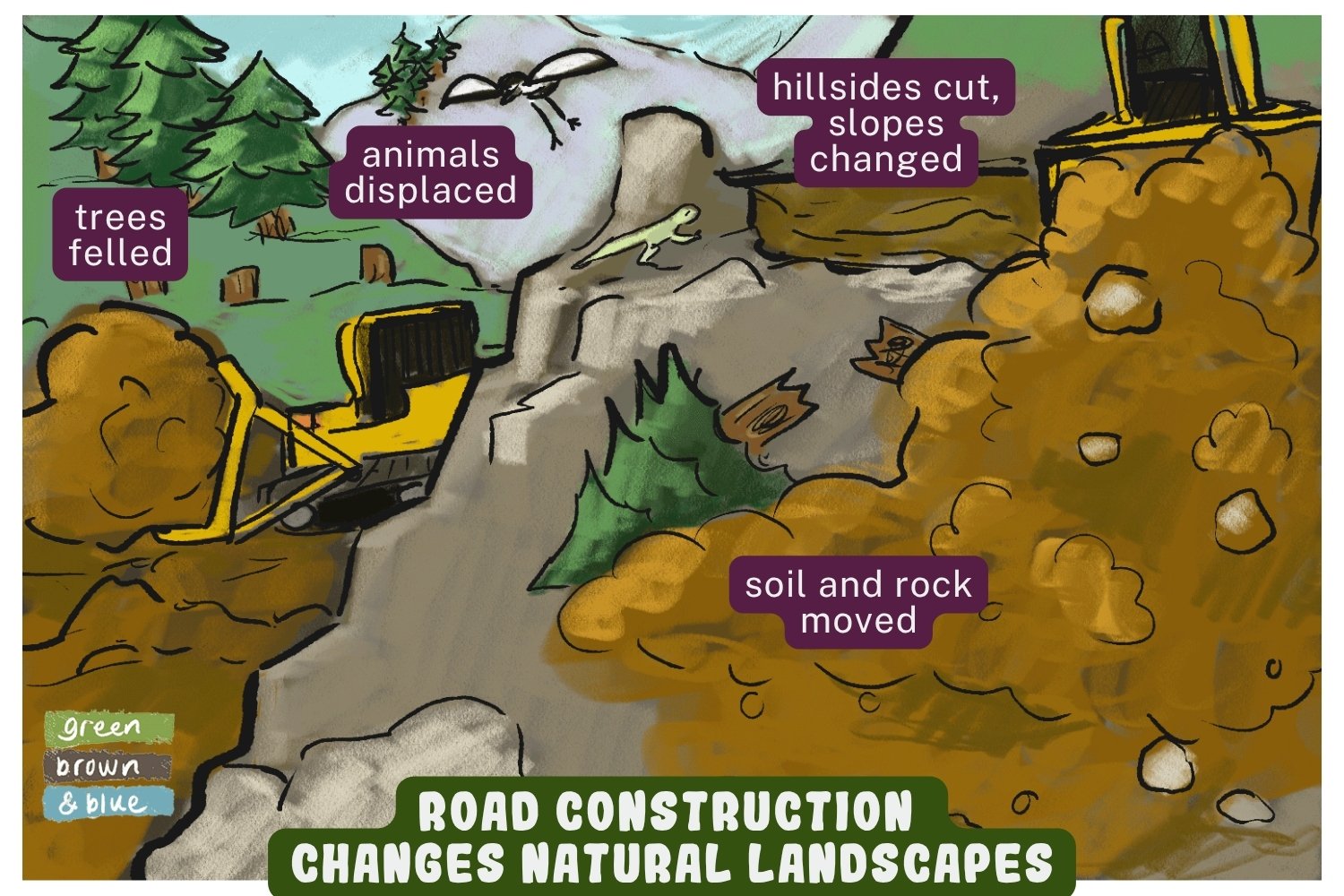
When we build roads, we change habitats, sometimes in big ways.
We cut down trees, cut into mountains, and divert streams.

Roads can cause erosion. Soils and sediment from roads can wash into streams and muddy the water.

When a road cuts through a forest, it creates an edge. The edge of the forest is brighter, hotter, windier, and drier than the inside of the forest. Different plants will grow at the forest edge. Different animals will live there.

Roads also change the flow of water. Rain does not soak into paved roads. When it rains, the water flows along the road surface and can cause flooding.

Roads make it easier for people to access remote areas.
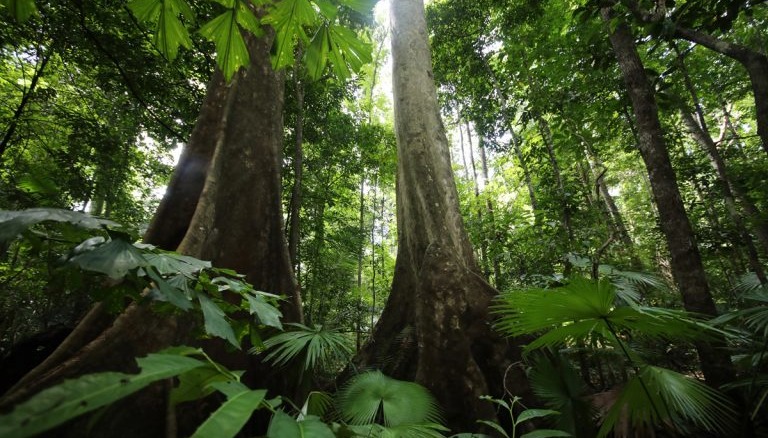
Imagine a tropical forest that is completely remote. When the first road is built, people can access the forest more easily. Loggers can cut and move trees. Miners, hunters, farmers, and tourists can enter the forest too. More people can move in and build more new roads.
Planning future roads
Unless we all begin to travel by jetpack or flying car, roads are set to stay for a long time. And millions of kilometers (miles) more roads will be added by 2050.
The good news is that we can help reduce the negative impacts roads have on wildlife and the environment.

Where we put roads matters. We can build roads around — instead of through — important animal migration paths. We can elevate roads over wetlands or areas critical to animals.
Other solutions: Fences and wildlife crossings help protect animals. We can slow traffic and use warning signs to alert drivers to animals. We can also close roads at night or during animal migrations. We can put up barriers to reduce noise, light, and other types of pollution from cars.
Read part 2: How wildlife crossings help animals and connect habitats
Learning resource for educators
Educator tip: After reading, ask students to map roads in their neighborhood or near school. What animals live nearby? How might roads impact them?
Mongabay News: Can ‘road ecology’ save millions of animals?
By Megan Strauss