A new atlas can help you explore the world-famous biodiversity of the Galapagos Islands from home.
The Galapagos Islands are a chain of islands 600 miles off the coast of Ecuador in the Pacific Ocean. In 1835 the scientist Charles Darwin visited the Galapagos Islands. He observed that closely related species were different on each island, and also different from their ancestors on mainland South America. These observations helped Darwin develop the theory of evolution by natural selection.
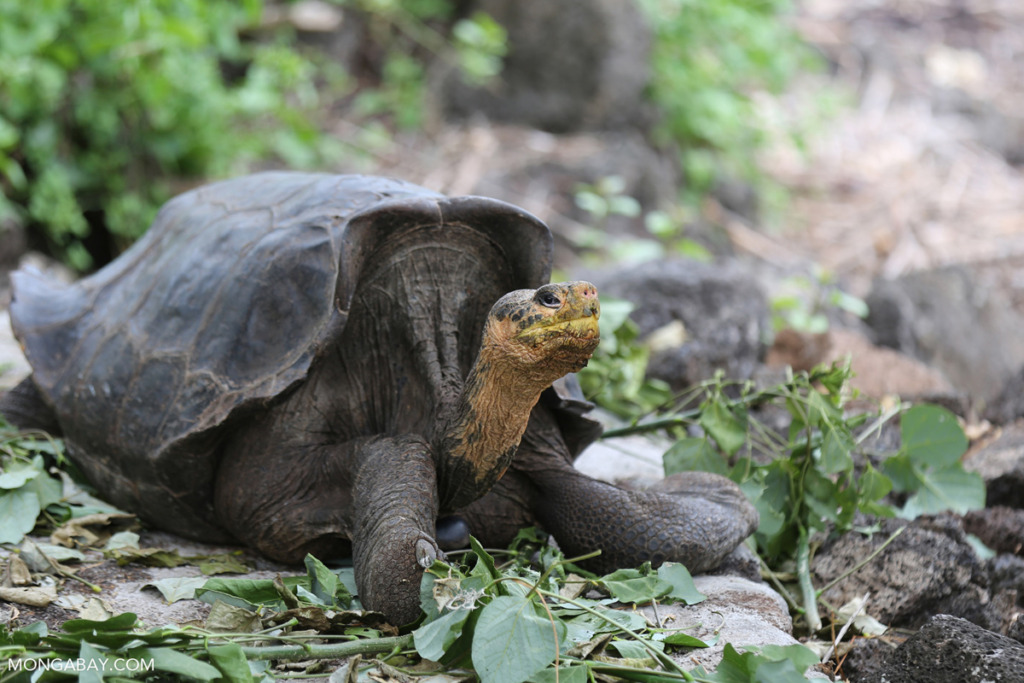
The Galapagos Islands are home to many amazing animals. These include the world’s largest tortoises, the world’s only marine lizard, and the northernmost penguin species.
The Darwin Foundation is a group that studies and helps conserve the Galapagos Islands. They have created the Galapagos Atlas — a free book that features the animals, plants, and other life found on the islands and surrounding ocean.
You can explore a digital copy of the Galapagos Atlas here, and check out what is known about island plants (flora) and animals (fauna). If you have a report or project to do about the Galapagos Islands and their biodiversity, geology, or human history, this could be a really useful place to start!

“There is still so much we don’t fully understand about Galapagos flora and fauna, and that’s part of what makes it so fascinating,” said Rakan Zahawi from the Darwin Foundation.
Rakan called the Galapagos Atlas a starting point for people wanting to solve some of the scientific mysteries of life in the islands.

“Each species entry comes with citations and references, so my first piece of advice to a young person who’s captivated by a species is to follow those leads,” he added. “Dig into the research behind the entry, see who’s been studying it and what they’ve found, and let that pull you further into the subject.”
This story is adapted from an article by David Brown, published on Mongabay.