How many North Atlantic right whales are there?
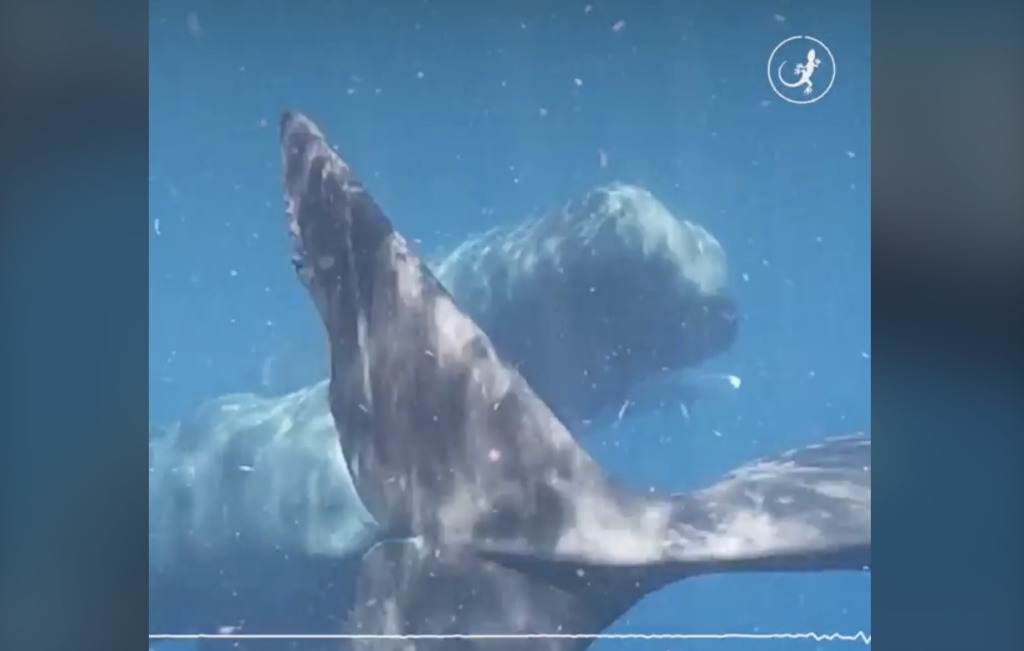
North Atlantic right whales are one of the most threatened whale species in the world. They once numbered in the tens of thousands in the North Atlantic, but hundreds of years of whaling reduced them to only 356 individuals by 2022.
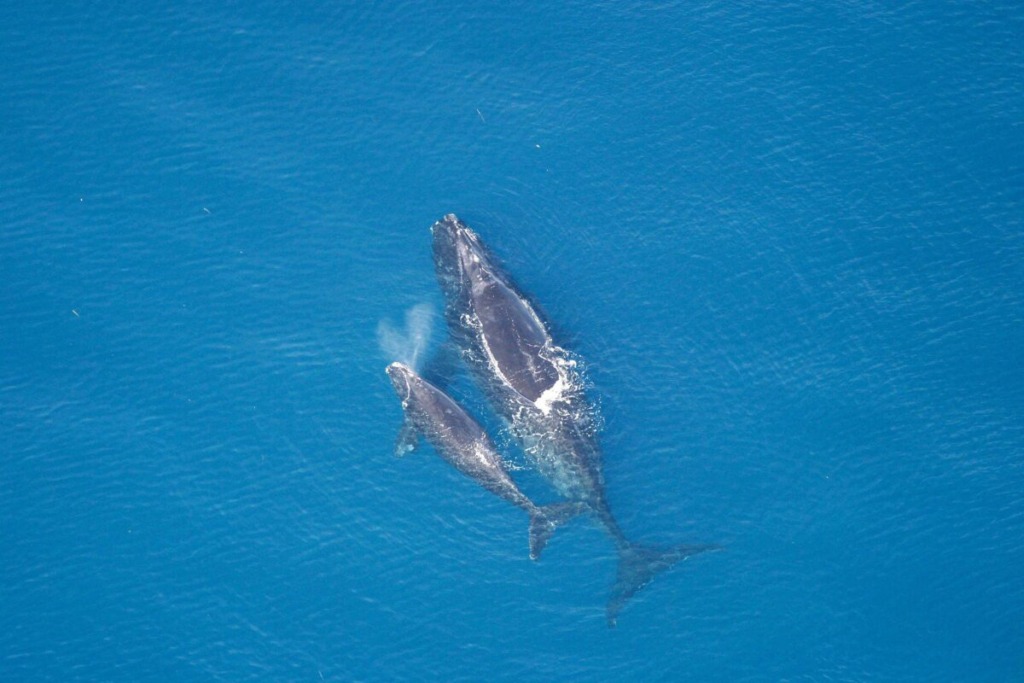
North Atlantic right whales are no longer hunted, but they are still endangered. The biggest dangers to them are being hit by ships or tangling in fishing gear and drowning.
A new method for counting whales
Counting North Atlantic right whales is important for their protection, and scientists are developing a new way to do this.
Whales make noise underwater, including North Atlantic right whales. Scientists record whale sounds in some parts of the ocean to detect if whales are present or not. This process is called acoustic monitoring. Acoustic monitoring is useful for knowing if whales are around, but not for detecting how many individual whales there are.
Traditionally, whales have been counted from the air. But aerial surveys can be expensive and often depend on weather conditions. Now, a group of researchers at Cornell University in the United States has combined acoustic monitoring and aerial survey data to estimate the number of right whales in Cape Cod Bay in the U.S. northeast.
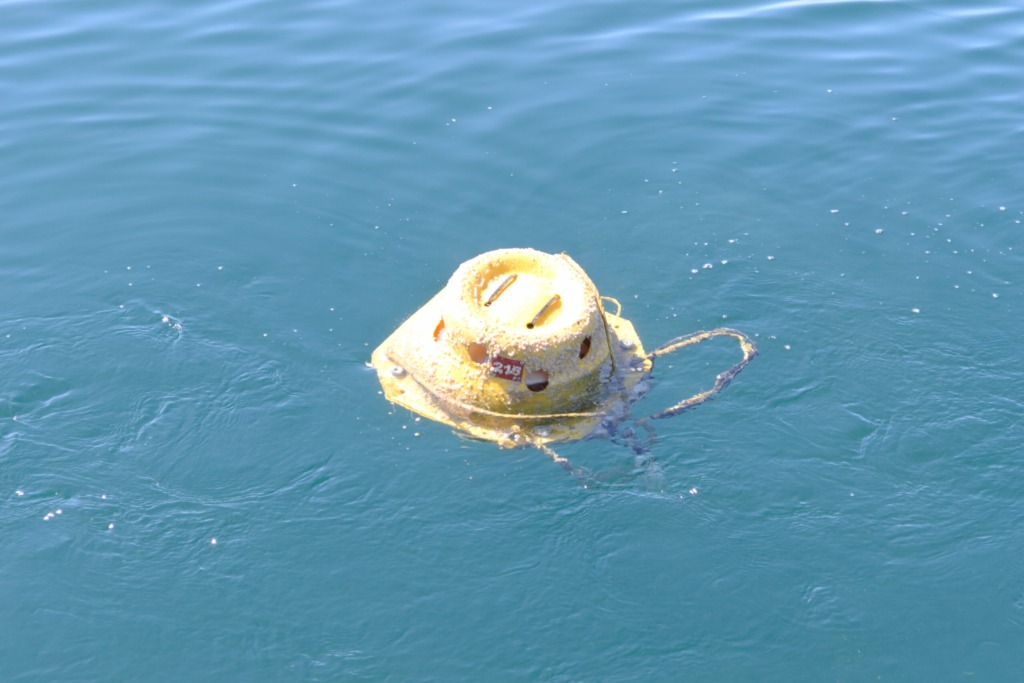
Starting in February 2019, the research team put five underwater microphones, or hydrophones, across Cape Cod Bay. Four months later, they retrieved the recorders from the five microphones. The team was able to estimate the total number of whale calls per day in Cape Cod Bay. Over the four months, this came to 250,000 unique whale calls.

The researchers used machine learning to match up the sound data with information on whale numbers collected from 16 aerial surveys of Cape Cod Bay. “Then we could see, as the plane is flying over the bay and the number of whales is being counted from an airplane, how many calls are being made during that same time interval,” explains researcher Irina Tolkova.
The researchers hope that their new method of counting North Atlantic right whales might someday be used all along their migratory route in the Atlantic Ocean.
Educator tip: Ask students why listening to whales is important for scientists who study them. Follow up with this story about scientists using AI to understand whale communication.
David Brown adapted this story for Mongabay Kids. It is based on an article by Abhishyant Kidangoor, published on Mongabay News.
You may like these stories
Can AI help us understand what whales are saying to each other?
Underwater cameras capture belugas on ‘summer vacation’