
What do you think the tree on the left is saying to the tree across the road?
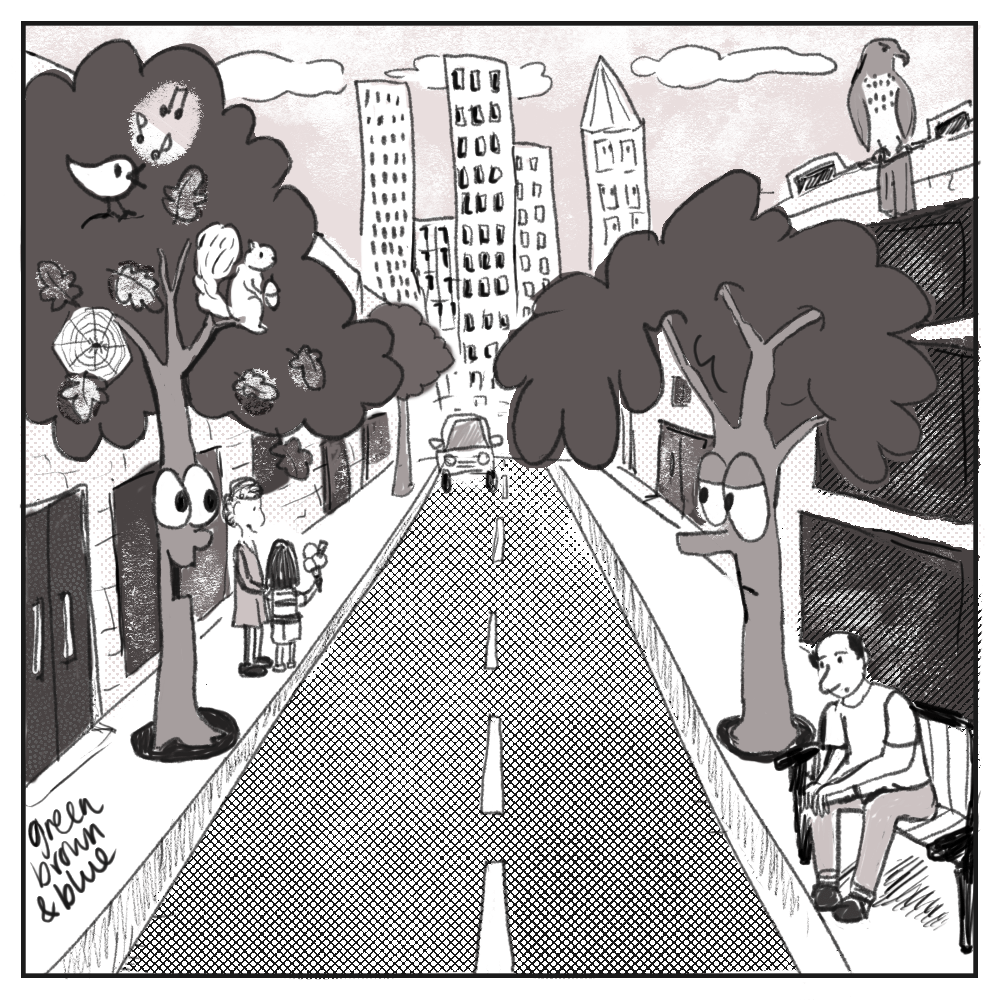
What is this cartoon about?
We know that trees in forests are important. But what about trees in cities?
Yes — city trees are important too! Trees in cities provide many environmental, social, and economic benefits. Here are some good things we get from street trees and urban forests:
Trees reduce floods, keep us cool, and improve air quality
When it rains, trees and their roots soak up water. This helps prevent flooding and reduces runoff into storm drains. Trees also cool hot city streets. They shade us from the sun, and they transpire, which means they release moisture into the air. They help clean air by absorbing pollution. They store carbon dioxide and give us oxygen to to breathe. Trees also act as windbreaks.
Trees provide habitat for other organisms
Street trees provide food and homes for birds, insects, spiders, squirrels, and many other animals. Some trees provide homes for plants that grow on plants, called epiphytes. Trees spaced close together create pathways for animals to safely travel from one part of the city to another.
Trees make us happy and healthy
Trees beautify our cities and make us want to go outside. The shade of a tree is a great place to sit and read or gather with friends on a hot day. Did you know trees are also good for business? People enjoy shopping on tree-lined streets, and green cities attract tourists. Studies show that homes on streets with trees often sell for more than homes on streets with few or no trees.
Conversation starters and prompts
What would it be like if your city, town, or school grounds had no trees? What do you like about trees?
Can you name the trees that grow in your city or on your school grounds? Some common trees planted in urban landscapes include oaks, plane trees, maples, elms, and crabapples. You can use apps like Seek by iNaturalist to discover the names of trees!
What do you think makes a good street tree? Hints: How long does the tree live? How much shade does it provide? Does it help clean up pollution from cars? How much water does it need?
How to write a caption
Guidelines
- Look closely. Who are the characters? How are they posed? What are their facial expressions? What are they doing, thinking, and feeling?
- Writing tips: Keep it short. Aim for 1–2 sentences.
- Make it funny! Use humor. Add a twist or something unexpected. Play with words.
- Try several ideas, then pick your favorite.
- Remember, there is no “right” answer!
Example caption starters
- “It’s like they say … ?”
- “Another beautiful day in the city … “
- “I’m just doing my job … “
Submit your captions!
We’d love to see what you come up with! We may even post your caption right here on Mongabay Kids! Parents or guardians can email submissions to our editorial team: kids [at] mongabay.com.