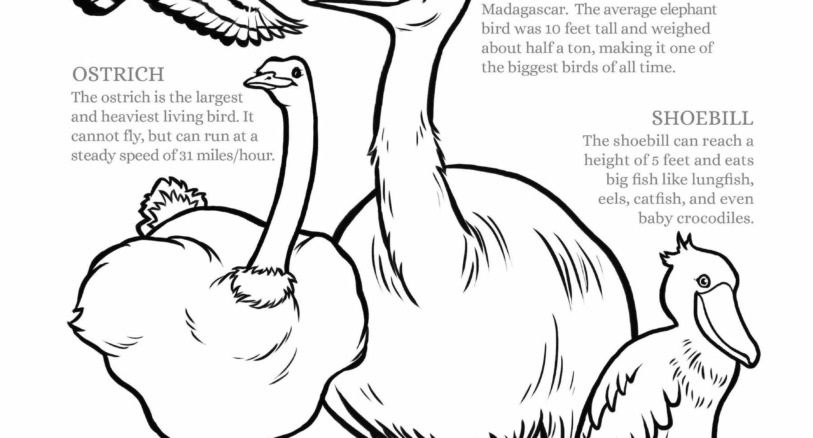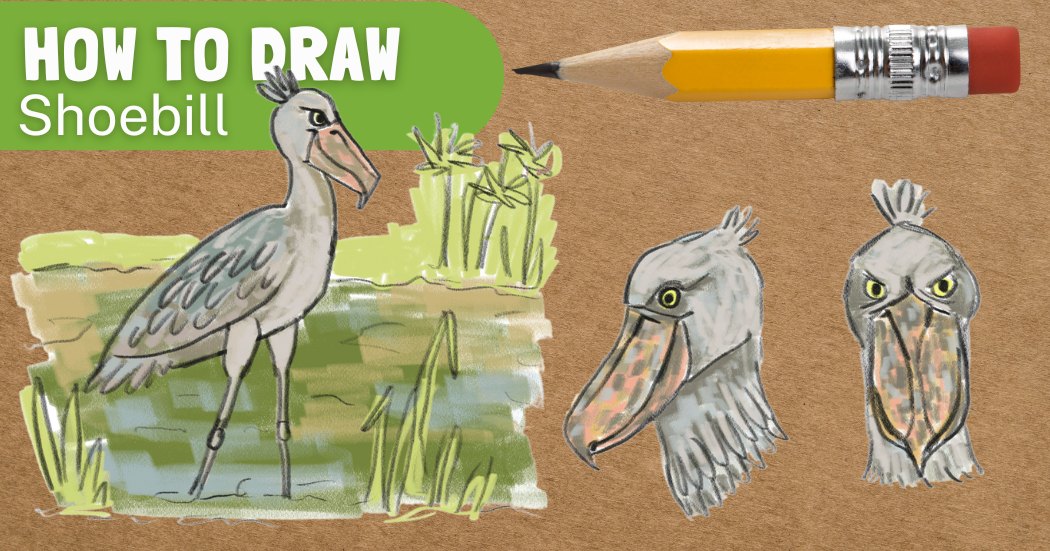
The shoebill (scientific name: Balaeniceps rex) is a large wading bird that lives in the wetlands of Central and East Africa, where it hunts fish and other wetland animals. Long-legged shoebills reach heights of up to 1.5 meters (almost 60 inches). Often described as prehistoric-looking, the shoebill has some interesting features, like its huge, clog-shaped bill and intense, staring eyes.


Fun facts about shoebills
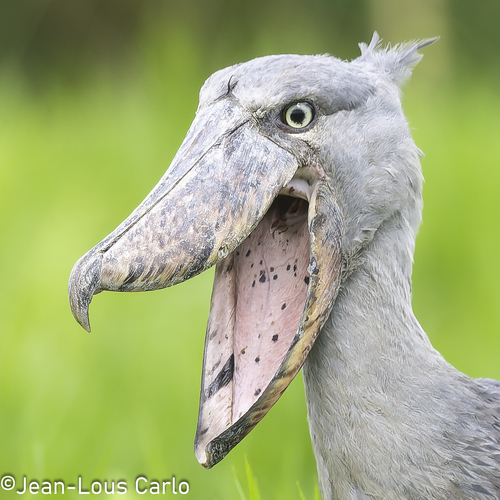
Image by Zein et Carlo, via iNaturalist (CC BY-NC).
A deadly shoe
Their wide, clog-shaped bill has sharp edges and a hooked tip that is perfect for spearing, picking up, and gulping down large wetland prey, including lungfish, frogs, and sometimes even small crocodiles.

Image by Neil Shepherd, via iNaturalist (CC BY-NC).

Image by Thomas S, via Wikimedia Commons (CC BY-SA 2.0).
War of the wingspans!
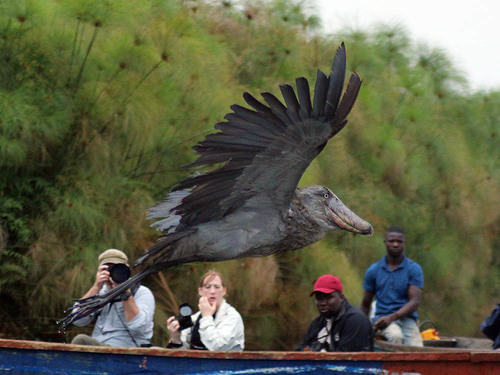
How does the wingspan of a shoebill compare to that of a basketball player? Shoebills have wingspans of 2.3 to 2.6 meters (7 feet 7 inches to 8 feet 6 inches). NBA players Victor Wembanyama and LeBron James have wingspans of 2.4 meters (8 feet) and 2.1 meters (7 feet), respectively.
Another fun fact: Shoebills flap their massive wings slowly. Other birds with slow flapping rates include crows, eagles, and albatrosses.

Image by alanbedfordshaw, via iNaturalist (CC BY-SA).
Strongest chick survives
Both shoebill parents nurture their young. The female lays 1-3 eggs, and the parents take turns incubating them. Mom and Dad feed and attend to the chicks when they hatch. Usually, only the healthiest, strongest chick survives. This is often the firstborn, as it has a head start on the others. Sibling rivalry can get nasty, with chicks vying to survive.

Conservation status
Shoebills are a vulnerable species, with an estimated 3,300- 5,300 mature adults remaining in the wild. Agriculture, pollution, and climate change are some of the threats to these unique birds.
Because shoebill parents raise one chick at a time, their numbers can’t increase quickly. Protecting shoebill habitat is one way to help this species.
Learn more
San Diego Zoo Wildlife Alliance: Shoebill fact page
BBC Earth video: The dark side of shoebill chicks