By David Brown
The Chupacabra is said to be a creature that roams the deserts and forests of North, Central, and South America, drinking the blood of goats and other farm animals.
Is the Chupacabra real? Or is it instead a cryptozoological beast like Bigfoot or the Loch Ness monster — the kind of creature people want to believe exists, but probably doesn’t?
Are there any real-life animals that match the description of the Chupacabra?
Let’s find out!
1. A “goat sucker” emerges in Puerto Rico

The modern Chupacabra legend began in Puerto Rico in the 1990s, when newspapers reported that goats were being mysteriously drained of their blood. A comedian named Silverio Pérez came up with the name “Chupacabra” — or “goat sucker” in Spanish — to describe the creature people were blaming.
2. Will the real Chupacabra please stand up?
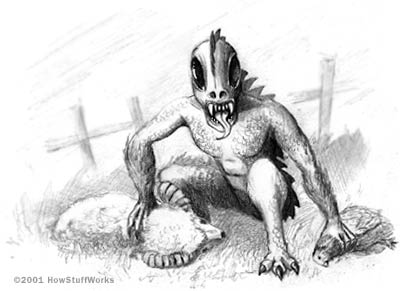
What exactly the Chupacabra looks like depends on who is telling the story. Some say it’s dog-like. Others say it is rat-like or rodent-like. It might walk on two legs or four. It sometimes has spines on its back. Some say it has a stinky odor. Its skin might be scaly or leathery.

3. A case of mistaken identity?
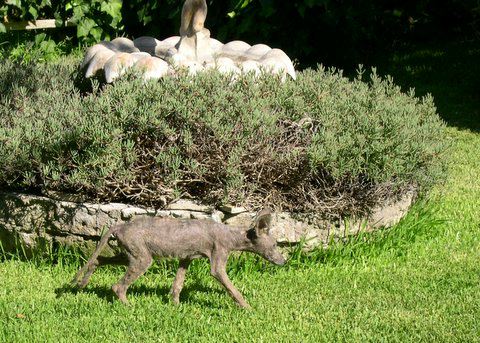
Several times, supposed Chupacabra sightings have turned out to be coyotes with mange. Mange is a skin disease caused by an insect called a mite. Mange causes a coyote to lose most of its hair and also lose weight. A skinny, hairless coyote with a bony spine sticking up might appear pretty scary, especially if you saw it at night in the dark.
4. A real vampire
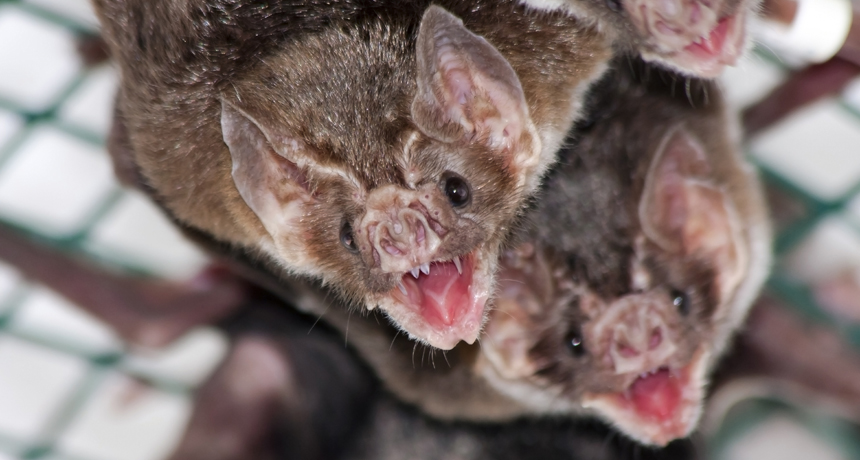
While the Chupacabra might be imaginary, there are real bloodsuckers where the Chupacabra is said to roam. Three species of vampire bats live across Central and South America.
A vampire bat will wait until its prey — mostly goats, cows, chickens, and occasionally humans — is asleep. The bat bites its prey with its needle-sharp fangs, leaving two tiny holes. It injects an anti-coagulant, a chemical that causes blood to flow. The bat slurps up enough blood to fill its stomach, and then immediately pees out the watery part of the blood. What is left are yummy nutritious blood cells. The prey animal often sleeps right through it all!
Could the Chupacabra be a cover story planted by vampire bats? Hmmmm …
5. A “goatsucker” from Europe

The Chucabra isn’t the first creature accused of stealing from goats. Centuries ago, a bird in Europe was blamed for being a goatsucker. The nightjar is a small brown bird that flies at night, eating insects. Somehow, in medieval Europe, the nightjar got a reputation for being a “goatsucker” and sucking milk from goats. Nobody is sure how this little bird got this false reputation, but it was Chupacabra-ing hundreds of years before the legend of the modern Chupacabra showed up in stories.
So, is the Chupacabra a terrifying, real-life goatsucker? Or just a mix of coyotes, vampire bats, and human imagination? You weigh the evidence and decide.

.jpg)


