By Ariana Klappert
At first, you see just eight legs slowly crawling across the desert. Suddenly, a quiet rural town is invaded by an army of small, hairy creatures. They destroy everything in their path. There is no escape. Everyone is running.
Horror movies like the above scene from Kingdom of the Spiders often present tarantulas, from the spider family Theraphosidae, as ruthless, unstoppable creatures. But are tarantulas really that dangerous to humans?
From fiction to fact
In real life, tarantulas are skillful hunters, but humans are far from being their prey.
1. The truth behind the tarantula trek

Some tarantulas, like the brown tarantula (Aphonopelma hentzi) in the U.S., do move in large groups. But, unlike the movies, they are not trying to take over a village or hunt humans. Instead, male tarantulas are searching for mates at the same time. This seasonal journey is sometimes called the tarantula trek, a behavior documented by researchers studying tarantula movements and described in reports by National Geographic.
Tarantulas don’t chase humans. They barely even chase their actual prey, and humans are much too big for them to eat. In fact, it turns out they are more scared of us than we are of them!
Tarantulas are ambush predators. That means they wait quietly near their burrows and set up silk “trip lines” for their prey. Researchers say these threads help them feel vibrations from nearby animals. By sensing these movements, a tarantula can tell whether something is prey or a potential threat.
A tarantula usually only hurts humans when cornered or picked up, and even then, it is rarely dangerous. If it bites, the venom is usually mild, like a bee sting. Most of the time, tarantulas defend themselves with special hairs called urticating hairs.
2. Flying hair for defense
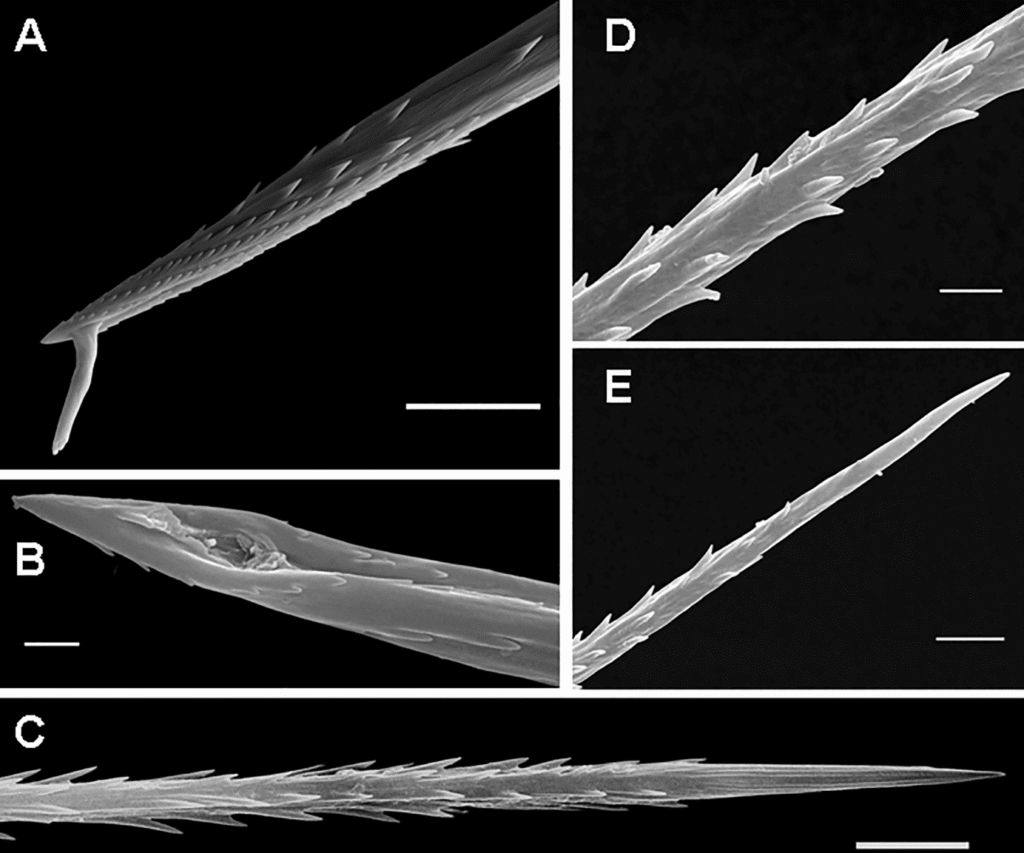
Tarantula hairs are made of a strong material called chitin, similar to the structure of their outer shell. It’s different from mammal hair, like ours, which is made of keratin, the same as our fingernails.
Scientists studying tarantulas found that many tarantulas have tiny, sharp hairs called urticating hairs that they use for defense. They can rub their legs to flick these defense hairs toward a predator. These special hairs have tiny backward-pointing bits that can catch in a predator’s skin or eyes. For most people, they only cause a small sting or itch. People who are allergic may have stronger reactions. For this reason, it is best to admire tarantulas from a safe distance.
3. Gentle giants of the spider world

Tarantulas are among the largest spiders in the world. According to the Smithsonian National Zoo, some species like the Goliath bird-eater (Theraphosa blondi), can grow up to 28 centimeters (11 inches) across, about as big as a dinner plate.
The Goliath bird-eater is native to the rainforests of South America. Despite its name, it rarely eats birds. Instead, researchers and naturalists have found that it usually eats small mammals like rodents, amphibians like frogs, and lots of insects.
4. Tarantulas come in hundreds of colors and sizes

More than 1,000 species of tarantulas have been described, according to the World Spider Catalog. Not all are as big as the Goliath bird-eater. They come in hundreds of sizes and colors, which help them survive in different habitats.
An international group called the Global Biodiversity Information Facility, or GBIF, has gathered data on animals around the world, showing that tarantulas are found on every continent except Europe and Antarctica. They can be found in habitats such as deserts, grasslands, and tropical forests.
5. Why tarantulas are important

Scientists say that as predators of insects and other small animals, tarantulas play an important role in local food webs and help maintain populations they prey on, like insects. Many species also live in burrows, meaning they interact closely with the soil in the areas where they live. Studying these burrows helps researchers understand how tarantulas shape the soil and learn more about the ecosystems where they live.
Tarantulas may look scary, but they are fascinating spiders that play an important role in nature. If you see one, remember: they are more afraid of you than you are of them.
References
Janowski-Bell, M., & Horner, N. (1999). Movement of the Male Brown Tarantula, Aphonopelma hentzi (Araneae: Theraphosidae). Journal of Arachnology, 27, 503–512.
Gammon, K. Why La Junta, Colorado, hosts an annual tarantula festival. (2025, September 30). Retrieved from https://www.nationalgeographic.com/animals/article/tarantulas-spider-festival-colorado.
Global Biodiversity Information Facility. (n.d.). Theraphosidae. Retrieved from https://www.gbif.org/species/5650.
Hembree, D. I. (2017). Neoichnology of tarantulas (Araneae: Theraphosidae): Criteria for recognizing spider burrows in the fossil record. Palaeontologia Electronica, 20(3), Article 45A. https://doi.org/10.26879/780.
Kaderka, R., Bulantová, J., Heneberg, P., & Řezáč, M. (2019). Urticating setae of tarantulas (Araneae: Theraphosidae): Morphology, revision of typology and terminology and implications for taxonomy. PLOS ONE, 14(11), e0224384. doi:10.1371/journal.pone.0224384.
National Geographic. (n.d.). Tarantula facts. Retrieved from https://www.nationalgeographic.com/animals/invertebrates/facts/tarantulas.
National Geographic. (n.d.). Goliath bird-eater. Retrieved from https://www.nationalgeographic.com/animals/invertebrates/facts/goliath-birdeater.
Nyffeler, M., & Birkhofer, K. (2017). An estimated 400–800 million tons of prey are annually killed by the global spider community. The Science of Nature, 104(3-4). doi:10.1007/s00114-017-1440-1.
Schwerdt, L., Elena de Villalobos, A., & Miles, F. P. (2018). Spiders as potential bioindicators of mountain grasslands health: The Argentine tarantula Grammostola vachoni (Araneae, Theraphosidae). Wildlife Research, 45(1), 64-71. doi:10.1071/wr17071.
Smithsonian National Zoo. (n.d.). Goliath bird-eating tarantula. Retrieved January from https://nationalzoo.si.edu/animals/goliath-bird-eating-tarantula.
World Spider Catalog. (n.d.). Family: Theraphosidae. Retrieved from https://www.wsc.nmbe.ch/family-detail/100.